How to Froth Milk Without a Steam Wand: 5 Easy Methods at Home
Warm milk to 55–65°C (131–149°F), then froth it by pumping it in a French press, shaking it in a jar and microwaving for 30 seconds, or using a handheld or electric frother. Whole milk and barista-style plant milks froth best.
You don't need an espresso machine to enjoy a latte or cappuccino at home. Strong coffee from a moka pot, AeroPress or even a French press works well, and there are several simple ways to make frothy milk without a steam wand.
First: get the temperature right
Milk tastes sweetest when warmed to about 55–65°C (131–149°F) — hot to touch but comfortable to hold. Above about 70°C (158°F) it starts to taste cooked and the foam collapses faster. Never boil milk you plan to froth.
No thermometer? Warm it until the jug is too hot to hold for more than two or three seconds, and stop before you see steam rolling off or bubbles at the edges.
Method 1: French press
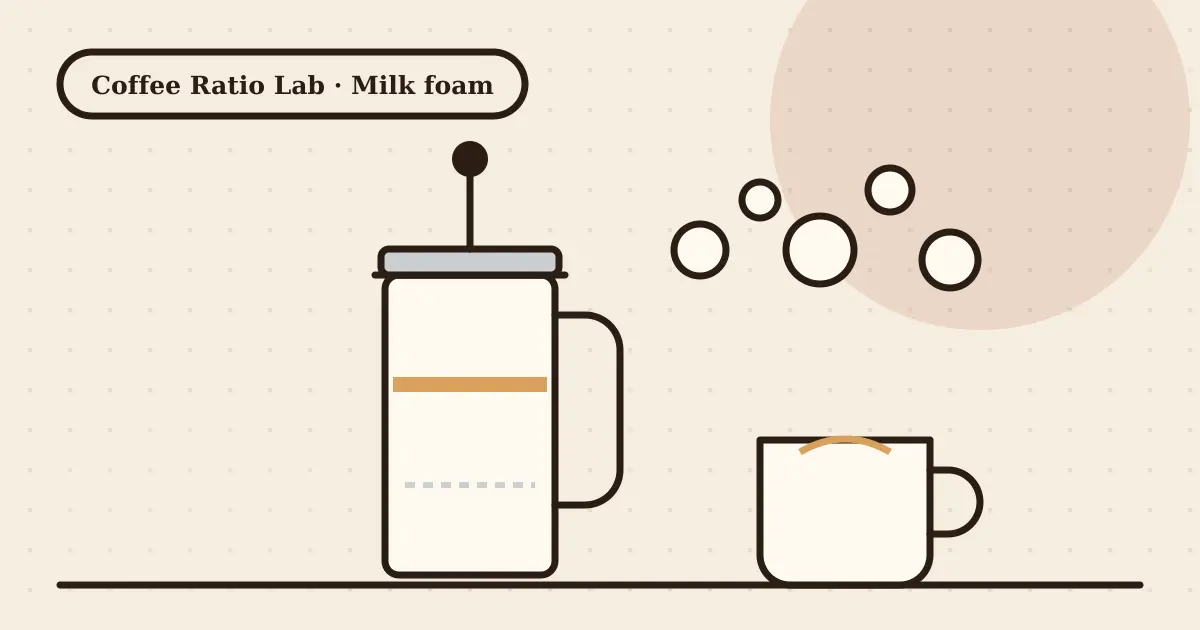
A French press makes surprisingly fine, silky foam.
- Heat the milk (stovetop or microwave) to 55–65°C (131–149°F).
- Pour it into a clean French press, filling no more than a third.
- Pump the plunger up and down quickly 20–30 times, keeping the mesh under the surface for the last few pumps.
- Tap the press on the counter and swirl to pop large bubbles.
Best for: lattes and flat-white-style milk. Wash the press well afterward so coffee oils don't affect the milk next time.
Method 2: A jar and the microwave
- Fill a clean, microwave-safe jar no more than halfway with cold milk.
- Screw the lid on tightly and shake hard for 30–60 seconds.
- Remove the lid and microwave for about 30 seconds to warm the milk and stabilize the foam.
- Spoon foam onto your coffee.
Best for: cappuccino-style foam with no special equipment. Never microwave a jar with a metal lid on.
Method 3: Handheld battery frother
These inexpensive wand frothers spin a small whisk.
- Warm the milk in a jug.
- Hold the frother just below the surface, switch on, and keep the whisk near the top for 15–20 seconds to add air.
- Lower it a little to swirl and smooth the foam.
Best for: quick, everyday foam. Start the frother in the milk, not in the air, to avoid splashes.
Method 4: Electric milk frother jug
These heat and froth at the same time with a magnetic whisk, and many have settings for thick foam, thin foam and hot milk only.
Best for: convenience and consistency, especially if you make milk drinks daily. Check that the jug is easy to clean — non-stick interiors make life easier.
Method 5: Whisk in a pan
- Warm the milk gently in a small pan.
- Tilt the pan and whisk briskly with a balloon whisk, or roll the whisk handle between your palms.
- Keep going for about a minute until foam forms.
Best for: when you have nothing else. Foam is lighter and less fine.
Methods compared
| Method | Foam quality | Effort | Equipment |
|---|---|---|---|
| French press | Fine, silky | Low | French press |
| Jar + microwave | Thick, airy | Low | Jar, microwave |
| Handheld frother | Good, quick | Very low | Inexpensive frother |
| Electric frother jug | Consistent | Very low | Frother jug |
| Whisk | Lighter, larger bubbles | Medium | Whisk, pan |
Which milk froths best?
- Whole dairy milk gives the creamiest, richest foam.
- 2% (reduced-fat) / low-fat milk makes plenty of foam, but it's lighter and drier.
- Barista-style plant milks (oat, soy, almond) contain added ingredients to help them foam and hold up in coffee. Standard plant milks often foam poorly.
- Fresh milk froths better than milk near its use-by date.
Putting it together: a simple homemade latte
- Brew a strong coffee: 60–80 ml from a moka pot or concentrated AeroPress (see our inverted AeroPress guide).
- Froth 150–200 ml of milk using any method above.
- Pour the milk in slowly, holding back foam with a spoon, then spoon a thin layer on top.
Frequently asked questions
Can I froth cold milk?
Yes. Cold foam is popular for iced drinks. A handheld frother or shaken jar works well with cold milk; skim and barista oat milks make particularly stable cold foam.
Why won't my milk froth?
It may be too hot, too old, or a plant milk not designed for foaming. Try fresh whole milk or a barista-style plant milk, warmed to no more than 65°C (149°F).
What's the difference between latte and cappuccino foam?
Latte milk has a thin layer of fine, silky foam. Cappuccino has a thicker, airier foam layer on top.
Can I froth milk in a blender?
Yes, a short blend of warm milk creates foam, but be careful with hot liquids: fill only partly and vent the lid as the manufacturer recommends.
Liked this guide? Get the next one free
Subscribe and get our free printable Brew Cheat Sheet — every ratio, grind and temperature on one page. Then one practical brewing tip a week. No spam, unsubscribe anytime.

We write step-by-step guides for everyday home brewers: moka pots, French presses, AeroPress, pour over and cold brew. Every guide is checked against manufacturer instructions and widely accepted brewing guidance, and updated when we learn something better. How we write our guides.