Cold Brew Ratio Guide: Concentrate vs Ready-to-Drink (With Dilution Table)
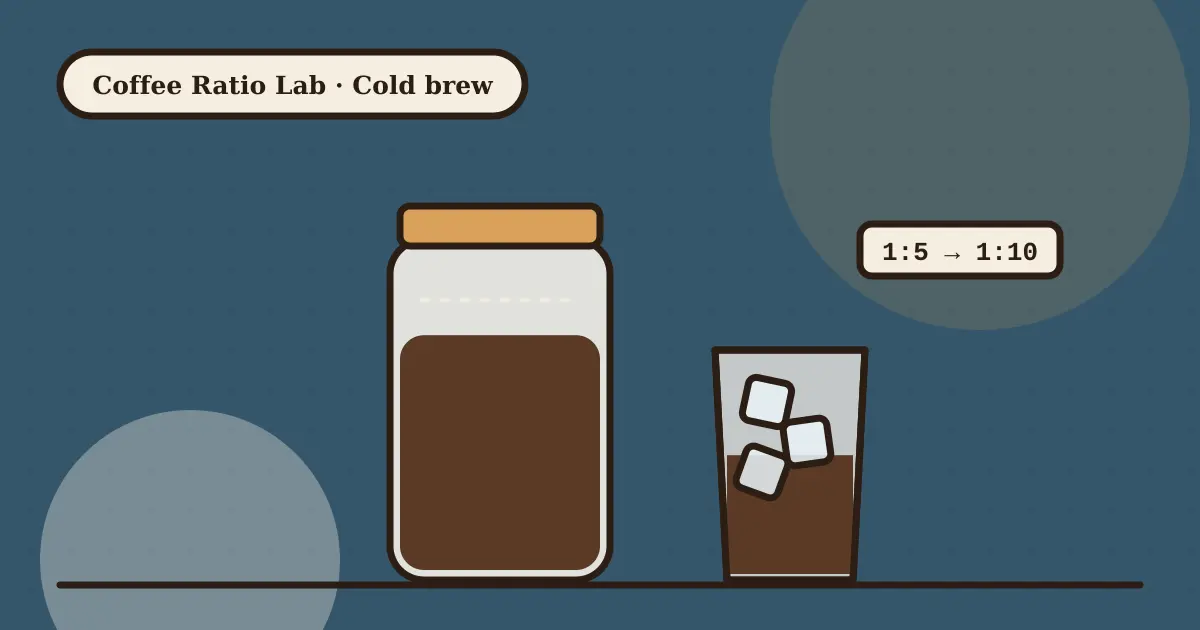
For cold brew concentrate use about 1:5 coffee to water (100 g to 500 ml (17 oz)) and dilute before drinking. For ready-to-drink cold brew use about 1:10. Use a coarse grind and steep 16–24 hours in the fridge.
Cold brew is made by steeping coarsely ground coffee in cold or room-temperature water for many hours. It tastes smooth, sweet and low in acidity, and it's very forgiving. The one thing that confuses people is the ratio, because there are two different ways to make it.
Concentrate or ready-to-drink?
- Cold brew concentrate uses a lot of coffee and little water. It's too strong to drink straight and is diluted with water, milk or ice before serving. It saves fridge space and lets you adjust strength cup by cup.
- Ready-to-drink cold brew uses less coffee and more water so you can pour it straight over ice.
Ratios at a glance
| Style | Coffee : water | Example |
|---|---|---|
| Strong concentrate | 1:4 | 100 g coffee : 400 ml water |
| Standard concentrate | 1:5 | 100 g coffee : 500 ml water |
| Strong ready-to-drink | 1:8 | 100 g coffee : 800 ml water |
| Standard ready-to-drink | 1:10 | 100 g coffee : 1 liter water |
| Light ready-to-drink | 1:12 | 100 g coffee : 1.2 liters water |
Grounds absorb water, so you'll get back less liquid than you put in — roughly 2 ml for every gram of coffee.
Grind size
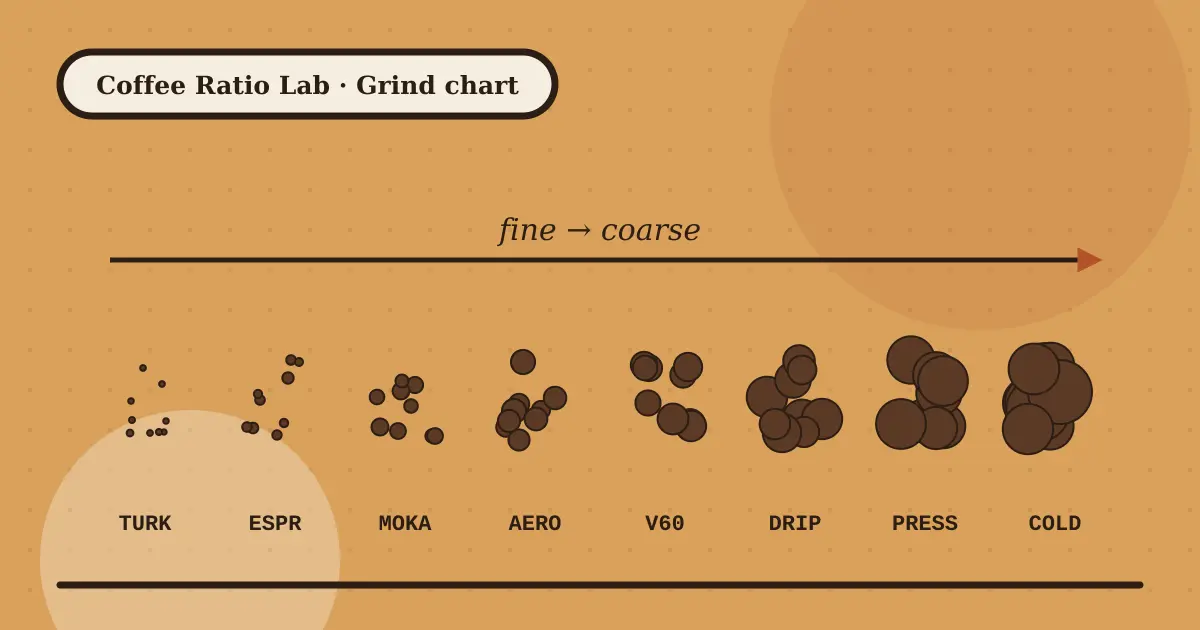
Use a coarse to very coarse grind, like rough sea salt or cracked pepper. Fine grinds over-extract during long steeps, taste muddy and are very hard to filter.
Steep time and temperature
| Where it steeps | Time |
|---|---|
| In the fridge | 16–24 hours |
| At cool room temperature | 12–16 hours |
Steeping in the fridge is the safer and more consistent option, especially in warm kitchens. Longer steeps add body and strength; past around 24 hours, flavors tend to turn woody or dull.
Step-by-step
- Weigh your coffee and grind it coarse.
- Put it in a large jar or jug and pour in cold, filtered water.
- Stir gently until all the grounds are wet.
- Cover and steep (see the table above).
- Strain through a fine mesh sieve, then again through a paper coffee filter or a cloth for a cleaner result.
- Bottle in a clean, sealed container and keep in the fridge.
Dilution table for concentrate
If you made a 1:5 concentrate, these mixes give a starting point:
| Drink strength | Concentrate | Water, milk or ice |
|---|---|---|
| Strong | 1 part | 1 part |
| Balanced | 1 part | 1.5 parts |
| Light | 1 part | 2 parts |
Ice melts and dilutes the drink, so pour slightly stronger than you'd like if serving over lots of ice. Our cold brew dilution calculator works out exact amounts for any ratio.
How long does cold brew last?
Kept sealed in the fridge, cold brew is best within about a week. Concentrate tends to hold flavor a little longer than diluted cold brew, but taste declines over time either way. Discard anything that smells sour, looks cloudy in an unusual way or shows any mold. Never leave it at room temperature for long periods after straining.
Caffeine note
Cold brew can contain a lot of caffeine because it uses a high dose of coffee. A glass of diluted concentrate may contain as much as or more caffeine than hot coffee, depending on the ratio and dilution. Check with our caffeine calculator if you're keeping track.
Frequently asked questions
What is the best ratio for cold brew?
For concentrate, 1:5 is a reliable start. For ready-to-drink cold brew, try 1:10.
Can I make cold brew with regular ground coffee?
Yes, but pre-ground filter coffee is finer than ideal and may taste a bit muddier. Filter twice to remove fines.
Should cold brew steep in the fridge or on the counter?
The fridge is the safer, more consistent choice. Counter steeping is faster but best kept to cool rooms and shorter times.
Is cold brew less acidic?
It generally tastes less acidic and bitter than hot coffee because cold water extracts some compounds more slowly.
Liked this guide? Get the next one free
Subscribe and get our free printable Brew Cheat Sheet — every ratio, grind and temperature on one page. Then one practical brewing tip a week. No spam, unsubscribe anytime.

We write step-by-step guides for everyday home brewers: moka pots, French presses, AeroPress, pour over and cold brew. Every guide is checked against manufacturer instructions and widely accepted brewing guidance, and updated when we learn something better. How we write our guides.