How Much Coffee for a 3, 6 and 9-Cup Moka Pot (Grams Table + Calibration Trick)
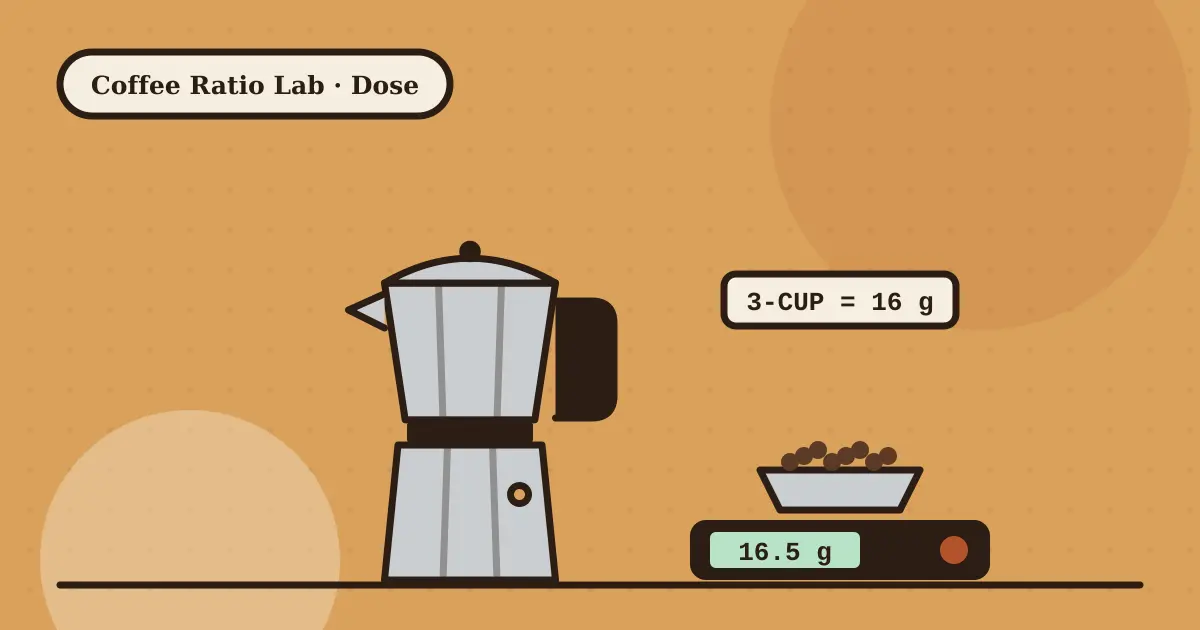
A moka pot's dose is set by its basket: fill it level without tamping. As a guide that's about 7 g for a 1-cup, 15–17 g for a 3-cup, 20–22 g for a 4-cup, 28–32 g for a 6-cup and 40–45 g for a 9-cup pot, with water filled to just below the safety valve. Weigh your own full basket once to know your exact dose.
Most brewing methods let you choose your ratio. The moka pot doesn't — not really. The basket and boiler are sized to work together, so the right amount of coffee is "a full, level basket." That's why people searching for a ratio get confusing answers.
This guide gives you a grams table for every common size, explains why the numbers vary, and shows you how to measure your own pot in three minutes so you never guess again.
The quick table
These are typical ranges for classic aluminum pots like the eight-sided design. Stainless steel pots and other brands can differ, so use the calibration method below for your exact pot.
| Pot size | Coffee (level basket) | Water in boiler (to valve) | Coffee you get |
|---|---|---|---|
| 1-cup | 6–8 g | 60–70 ml | 40–50 ml |
| 2-cup | 10–12 g | 90–110 ml | 70–90 ml |
| 3-cup | 15–17 g | 140–160 ml | 120–140 ml |
| 4-cup | 20–22 g | 190–210 ml | 160–180 ml |
| 6-cup | 28–32 g | 280–310 ml | 240–270 ml |
| 9-cup | 40–45 g | 420–460 ml | 360–400 ml |
| 12-cup | 52–58 g | 600–650 ml | 520–580 ml |
That works out to a ratio of roughly 1:9 to 1:10 coffee to water — much stronger than drip coffee (around 1:16), which is why moka coffee is often diluted with hot water or milk.
Why your pot might be different
- Basket depth varies by brand, even for the same "cup" size.
- Grind size changes the weight: a finer grind packs more coffee into the same space.
- Roast level matters: dark roast beans are less dense, so a level basket weighs a little less.
- "Level" means different things to different people — a slight dome can add 2–3 g.
The 3-minute calibration trick
Do this once and write the numbers on a sticky note inside your cupboard.
- Weigh the empty basket (the funnel) on a kitchen scale, or put it on the scale and press "tare".
- Fill it with your usual grind until it's slightly over full, tap it twice on the counter, then level it with a straight edge (the back of a knife). Don't press.
- Read the weight. That's your dose — say, 16.5 g.
- Fill the boiler to just below the safety valve, then pour that water into a measuring cup. That's your water amount — say, 150 ml (5.1 oz).
- Divide: 150 ÷ 16.5 ≈ 1:9. Now you know your pot's natural ratio.
Next time, weigh out the dose before grinding — it's faster than filling and levelling, and the result is more consistent.
Can you use less coffee for a weaker cup?
Not well. If the basket is only partly full, water rushes through the loose bed, extracting unevenly. You'll get a cup that's weak and bitter. Better options:
- Dilute after brewing: add hot water for a longer, gentler drink (a moka "Americano").
- Use a smaller pot for less coffee.
- Use a reducer basket, if your brand sells one for your model.
Can you use more coffee for a stronger cup?
You can't fit more into a level basket without packing it, and packing raises the pressure — which can cause leaks or spurting (see why moka pots leak). To make it taste stronger:
- Grind one step finer (not espresso-fine).
- Use a darker roast.
- Stop the brew earlier — before the pale, gurgling end — so the cup is more concentrated.
Tablespoon equivalents (if you don't have a scale)
Using a level tablespoon of moka-grind coffee at roughly 5–6 g (see our grams per tablespoon guide):
| Pot size | Approximate level tablespoons |
|---|---|
| 1-cup | 1 heaped |
| 3-cup | 3 level |
| 4-cup | 4 level |
| 6-cup | 5–6 level |
| 9-cup | 7–8 level |
Honestly, for a moka pot it's easier to fill the basket than to count spoons — the spoon table is only useful when buying pre-ground coffee and estimating how long a bag will last.
How long will a bag last?
A practical bonus of knowing your dose:
| Pot | Dose | Brews from a 250 g bag | From a 1 kg bag |
|---|---|---|---|
| 3-cup | 16 g | ~15 | ~62 |
| 6-cup | 30 g | ~8 | ~33 |
| 9-cup | 43 g | ~5 | ~23 |
Making milk drinks with moka coffee
- Latte-style: 3-cup pot (about 130 ml (4.4 oz) coffee) + 150–200 ml frothed milk, split into two drinks or one large mug.
- Cappuccino-style: 50–60 ml moka coffee + 60 ml (2 oz) milk and plenty of foam.
- Cortado-style: equal parts moka coffee and warm milk — see our cortado vs piccolo guide.
Froth the milk with any of the methods in our no-steam-wand milk guide.
Frequently asked questions
How many grams of coffee for a 3-cup moka pot?
About 15–17 g — enough to fill the basket level without tamping.
How much coffee goes in a 6-cup moka pot?
Around 28–32 g of coffee and 280–310 ml of water, depending on the brand.
What ratio is moka pot coffee?
Roughly 1:9 to 1:10 coffee to water, which is why it tastes strong.
Should I tamp coffee in a moka pot?
No. Tamping increases pressure and can cause bitterness, spurting or leaking. Fill level and wipe the rim.
Liked this guide? Get the next one free
Subscribe and get our free printable Brew Cheat Sheet — every ratio, grind and temperature on one page. Then one practical brewing tip a week. No spam, unsubscribe anytime.

We write step-by-step guides for everyday home brewers: moka pots, French presses, AeroPress, pour over and cold brew. Every guide is checked against manufacturer instructions and widely accepted brewing guidance, and updated when we learn something better. How we write our guides.