Manual vs Electric Burr Grinder: Which Makes Sense for 1–2 Cups a Day?
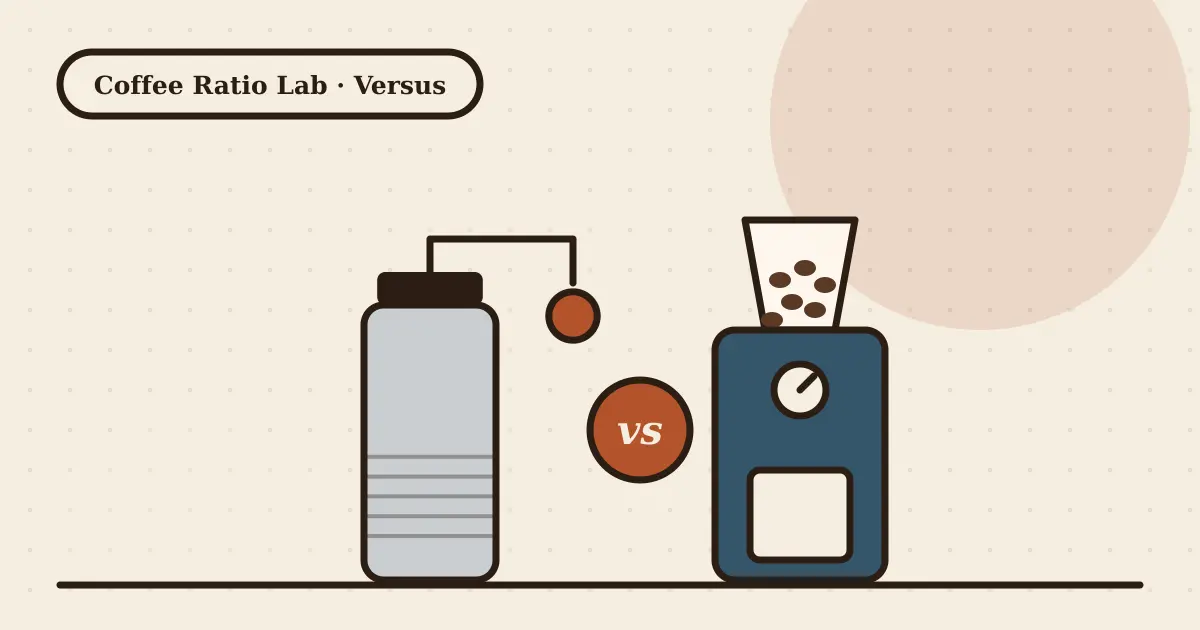
For one or two filter coffees a day, a good manual burr grinder usually gives the best grind quality for the money. Choose electric if you brew for several people, make espresso daily, or want speed and less effort.
Freshly ground coffee tastes better than pre-ground, and a burr grinder is usually the single upgrade that makes the biggest difference at home. The next question is whether to choose a manual hand grinder or an electric one. If you only brew one or two cups a day, the answer isn't as obvious as it seems.
How burr grinders work (briefly)
Both types crush beans between two burrs — one fixed, one rotating. The gap between them sets the grind size. Burrs come in two main shapes:
- Conical burrs: a cone-shaped inner burr inside a ring-shaped outer burr. Used in almost all hand grinders and many electric models.
- Flat burrs: two parallel rings with cutting teeth. Mostly found in electric grinders.
Either shape can produce excellent coffee. Build quality, burr alignment and stability matter more than shape for most home brewers.
Side-by-side comparison
| Factor | Manual grinder | Electric grinder |
|---|---|---|
| Grind quality per pound/euro spent | Often higher | Lower at the budget end |
| Time to grind 15–20 g | 30–90 seconds of effort | 5–20 seconds |
| Noise | Quiet | Noticeable whirr |
| Portability | Excellent | Needs mains power |
| Capacity | Typically 20–40 g | Often a full hopper |
| Grinding for espresso | Hard work, but good models can | Easy with espresso-capable models |
| Maintenance | Simple, no electronics | Simple, but more parts |
Why manual grinders are good value
Without a motor, all of the cost goes into the burrs and the bearings that keep them centred. That's why a mid-range hand grinder can produce more even grounds than an electric grinder at a similar price. For one person making one or two filter coffees a day, the 30–60 seconds of grinding becomes part of the routine — and it's quiet enough not to wake anyone.
Who should choose manual
- You brew one or two cups at a time
- You mainly use pour over, AeroPress or French press
- You travel or camp and want the same coffee anywhere
- You'd rather spend on grind quality than convenience
Why electric grinders win for convenience
Electric grinders remove effort and time. That matters if you make several cups, brew for a household, or have wrist or hand problems. Grinding coarse for a large French press or batch brewer by hand gets tiring quickly.
Who should choose electric
- You brew for two or more people, or make larger batches
- You switch between methods often and want quick adjustment
- You have limited grip strength or simply dislike the effort
- You make espresso daily (look for a grinder designed for it)
Matching grinder to brew method
| Brew method | Grind | Easier with |
|---|---|---|
| Espresso | Very fine | Electric espresso grinder |
| Moka pot | Fine | Either |
| AeroPress | Medium-fine | Either, manual is ideal |
| Pour over | Medium | Either |
| French press | Coarse | Either; electric for big batches |
| Cold brew | Very coarse | Electric for large batches |
What to look for in either type
- Stepped or stepless adjustment with small increments so you can fine-tune.
- Stable burrs: in hand grinders, two bearings supporting the shaft reduce wobble.
- Easy disassembly for cleaning (see our burr grinder cleaning guide).
- Low retention: how much coffee stays inside after grinding. Less is better for freshness.
- Available spare parts like burrs and catch cups.
Avoid blade grinders if you can
Blade grinders chop rather than crush, producing a mix of powder and large pieces. That uneven mix makes it hard to avoid both bitterness and sourness. Even an entry-level burr grinder is a clear improvement.
Our verdict
For one or two cups of filter-style coffee per day, a well-built manual grinder usually gives the best taste for the money and is pleasant to use. Choose electric if speed matters, you brew for a household, make espresso daily, or grinding by hand is uncomfortable for you.
Frequently asked questions
Is a manual grinder good enough for espresso?
Some higher-end hand grinders are designed for espresso and work well, but grinding fine takes more effort and time. For daily espresso, many people prefer an electric grinder.
How long does it take to grind coffee by hand?
Around 30–90 seconds for one cup, depending on the grinder and grind size. Finer grinds take longer.
Do conical or flat burrs make better coffee?
Both can make excellent coffee. Alignment, build quality and the right grind setting matter more for home brewing.
Is a burr grinder worth it?
For most people, yes — grinding fresh with even particles improves flavor more than almost any other upgrade.
Liked this guide? Get the next one free
Subscribe and get our free printable Brew Cheat Sheet — every ratio, grind and temperature on one page. Then one practical brewing tip a week. No spam, unsubscribe anytime.

We write step-by-step guides for everyday home brewers: moka pots, French presses, AeroPress, pour over and cold brew. Every guide is checked against manufacturer instructions and widely accepted brewing guidance, and updated when we learn something better. How we write our guides.