Electric Moka Pot: Is a Plug-In Moka Machine Worth It?
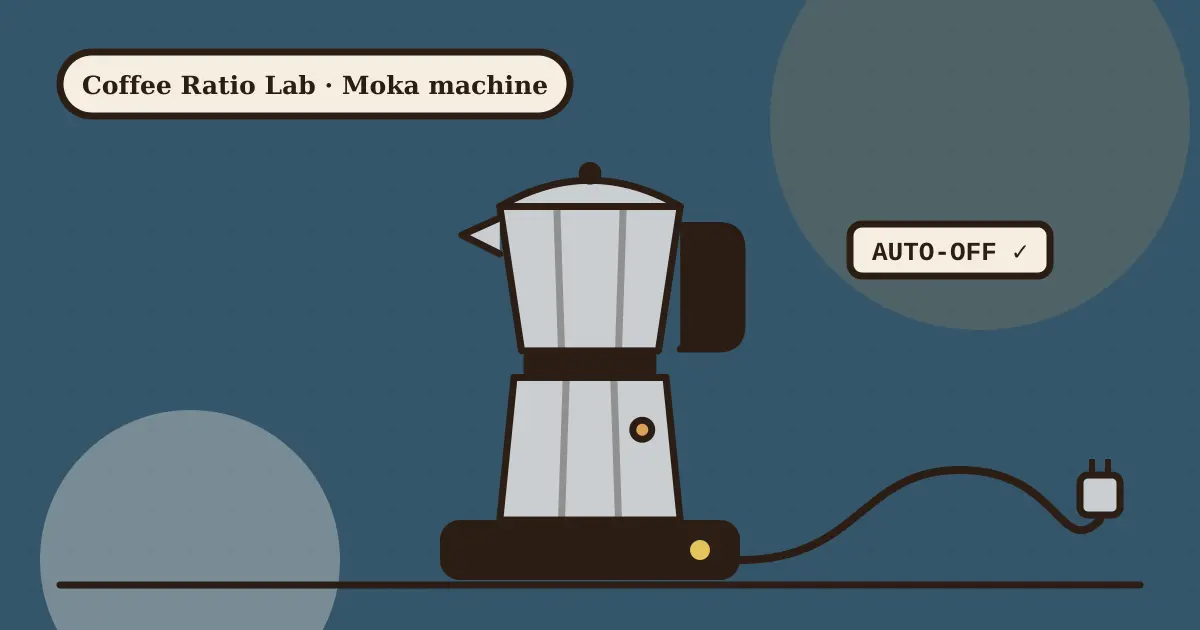
An electric moka pot is a moka pot with its own heated base, so it works without a stove and usually adds auto shut-off and keep-warm. The coffee is very similar to stovetop moka. It's worth it if you have no stove or an induction cooktop, want hands-off brewing, or make coffee at work; it's less ideal if you want precise heat control or a pot that lasts decades.
A moka machine — often sold as an "electric moka pot" — takes the classic three-chamber stovetop brewer and builds the heat source into a plug-in base. You fill it exactly like a normal moka pot, press a switch, and it stops by itself when the coffee is done.
That sounds like a simple upgrade, but it changes more than you might expect. This guide looks at what you gain, what you give up, and a simple way to decide whether it fits your kitchen.
How an electric moka pot works
Inside, it's the same physics as a stovetop pot. Water in the lower chamber is heated; steam pressure builds; that pressure pushes hot water up through the coffee basket and into the top chamber.
The difference is the heating element:
- Separate-base models have a jug-style power base. The boiler sits on it, a bit like a cordless kettle, so you can lift the pot off and pour.
- Built-in models have the element in the bottom of the boiler itself, with the cable attached.
Most add two features you can't get on a stove: a thermostat that cuts the power when the water has gone through, and on some models, a keep-warm mode for a set time.
Electric vs stovetop: an honest comparison
| Electric moka pot | Stovetop moka pot | |
|---|---|---|
| Heat source | Built-in, fixed power | Any stove (induction only with steel base) |
| Heat control | None or limited | Full — you choose the flame or setting |
| Stops by itself | Yes | No, you must watch it |
| Risk of burnt end-of-brew | Lower | Higher if left on the heat |
| Keep warm | Some models | No |
| Travel / camping | Needs mains power | Works anywhere with a flame |
| Can you wash it fully? | Boiler/base: hand wipe only | Every part rinses under the tap |
| Typical lifespan | Limited by electronics | Can last decades with new gaskets |
| Repairability | Gaskets yes, element rarely | Very high |
Does the coffee taste different?
Very similar, with one practical difference: you can't adjust the heat. On a stovetop, a good moka cup often comes from medium-low heat that makes the coffee flow slowly, like warm honey. An electric base heats at one fixed power. Some run quite hot, which can make the brew spurt near the end.
You can compensate with the two things you still control:
- Grind: if it spurts, go a touch coarser. If it tastes thin and sour, go a touch finer.
- Starting water temperature: starting with hot water shortens the time the coffee sits on heat. With an electric model, test both cold and hot starts — some thermostats switch off early if you start with very hot water, so check the manual.
Who should buy one
An electric moka pot makes most sense if one of these is true:
- You have no stove — student rooms, offices, studio apartments, campervans with hook-up.
- You cook on induction and don't want to replace your favorite pot or use an adapter plate. (Or see our induction moka pot guide.)
- You multitask in the morning. Auto shut-off means no burnt coffee if you get distracted.
- You like coffee ready when you wake up. A few models have timers.
Who should stick with stovetop
- You enjoy fine-tuning heat to get the best cup.
- You want a brewer that lasts 20+ years with only cheap spare parts.
- You travel, camp, or want to brew during power cuts.
- You want the full range of sizes — electric models usually come in only one or two.
A 30-second decision test
Answer these three questions:
- Do I have a working gas, electric or ceramic cooktop I'm happy to use every morning? (Yes = +1 stovetop)
- Do I often forget the pot and burn the coffee? (Yes = +1 electric)
- Will I brew somewhere without a stove (office, dorm, caravan)? (Yes = +1 electric)
Two or more points for electric? It's probably worth it. Otherwise, a quality stovetop pot — see our moka pot buying guide — will serve you longer and cost less.
What to check before buying
- Real capacity in milliliters. Like stovetop pots, "cups" mean small espresso cups (about 40–60 ml each).
- Separate base or built-in element. A separate base is easier to pour and clean.
- Auto shut-off and boil-dry protection. Both are important safety features.
- Keep-warm time. Long keep-warm can make coffee taste stewed; 20–30 minutes is plenty.
- Spare gaskets and filters for that exact model.
- Material that touches the coffee. Stainless steel or aluminum, plus a top chamber that may be transparent on some models.
- Voltage and plug for your country.
Using an electric moka pot well
- Fill the boiler to just below the safety valve (or the marked line).
- Fill the basket level with coffee ground slightly finer than filter — don't tamp. Use our moka pot coffee amounts table if you're unsure.
- Wipe the rim, screw the top on firmly.
- Switch on and leave the lid open the first few times so you learn how it behaves.
- When it gurgles and the thermostat clicks off, pour straight away and stir the coffee in the jug — the first and last parts of the brew taste different.
Cleaning and care
Never immerse the base or a boiler with a built-in element in water — wipe it with a damp cloth. Rinse the funnel, filter plate and top chamber with warm water. Replace the gasket when it hardens or the pot starts leaking at the joint (see why moka pots leak). Descale occasionally if you live in a hard-water area, following the manufacturer's instructions.
Frequently asked questions
Is an electric moka pot the same as an espresso machine?
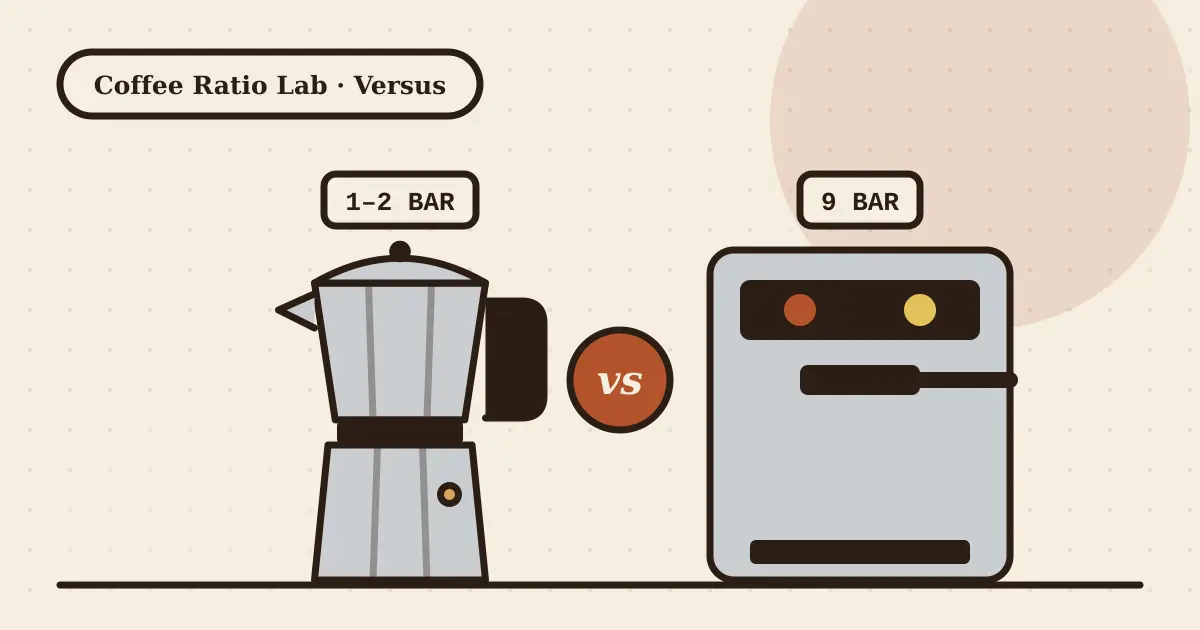
No. It brews at much lower pressure than an espresso machine, just like a stovetop moka pot. The result is strong, rich coffee, but not true espresso.
Can I use an electric moka pot on a stove?
Only if the manufacturer says so. Models with a built-in element should never go on a stove. Some separate-base models have a boiler that is also stove-safe — check the manual.
How long does an electric moka pot take?
Typically around 5–10 minutes depending on size and starting water temperature.
Is an electric moka pot worth it for induction cooktops?
It's one of the easiest options, along with a stainless steel induction-ready pot or an adapter plate. Choose electric if you also value auto shut-off.
Liked this guide? Get the next one free
Subscribe and get our free printable Brew Cheat Sheet — every ratio, grind and temperature on one page. Then one practical brewing tip a week. No spam, unsubscribe anytime.

We write step-by-step guides for everyday home brewers: moka pots, French presses, AeroPress, pour over and cold brew. Every guide is checked against manufacturer instructions and widely accepted brewing guidance, and updated when we learn something better. How we write our guides.