Best Water for Coffee: Tap, Filtered or Bottled? (And What to Avoid)
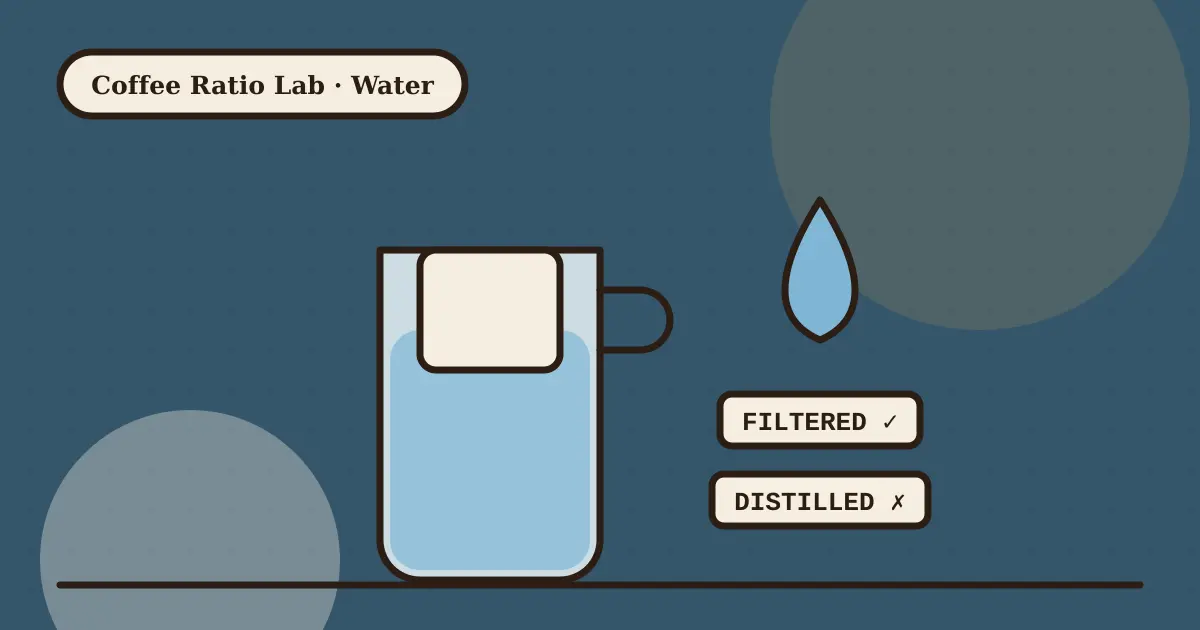
The best water for coffee is clean, odor-free and moderately mineralised — not too hard, not too soft. For most people, tap water through a simple carbon filter jug is ideal. Avoid distilled or reverse-osmosis water on its own (coffee tastes flat and it can harm machines) and very hard water (dull taste and limescale).
A cup of brewed coffee is roughly 98–99% water. Yet most people spend money on beans and grinders and never think about what comes out of the tap. Water quality changes how coffee tastes and how long your machine lasts — and improving it is often cheap.
What water does to coffee
Water isn't just a carrier. The minerals dissolved in it help pull flavor out of the coffee and also soften or sharpen how it tastes.
- Magnesium and calcium help extract flavor compounds. Too little and coffee tastes flat and empty.
- Bicarbonate (alkalinity) buffers acidity. Too much and coffee tastes dull and chalky; too little and it can taste sharp and sour.
- Chlorine and chloramine (used to treat tap water) add a medicinal or swimming-pool note.
- Odors and off-tastes in water go straight into the cup.
What "good" water looks like
The Specialty Coffee Association publishes a water standard. In plain terms, it aims for:
| Property | Target (approx.) | What it means |
|---|---|---|
| Odor / chlorine | None | No smell or chlorine taste |
| Total dissolved solids | ~150 mg/L (acceptable ~75–250) | Moderate mineral content |
| Calcium hardness | ~50–70 mg/L | Not too hard, not too soft |
| Alkalinity | ~40 mg/L | Enough buffer, not too much |
| pH | ~7 | Neutral |
You don't need to test your water to brew good coffee — but if your coffee always tastes flat or chalky, water may be the reason.
Tap, filtered, bottled or distilled?
| Water | Taste in coffee | Machine safety | Cost | Verdict |
|---|---|---|---|---|
| Tap (soft, no chlorine smell) | Good | Good | Free | Fine to use |
| Tap (hard or chlorinated) | Dull or off-tasting | Scale builds up | Free | Filter it |
| Carbon filter jug | Good–very good | Reduces some scale (depends on cartridge) | Low | Best value for most |
| Bottled spring water | Varies by brand | Varies | Medium–high | Check the label |
| Distilled / pure RO | Flat, sour, empty | Can harm some machines and sensors | Medium | Avoid on its own |
| Mineral water (high minerals) | Chalky, dull | Heavy scaling | High | Avoid |
How to tell if your water is the problem
Try this side-by-side test:
- Brew two cups with the same coffee, grind, ratio and method.
- Use tap water for one and filtered (or a low-mineral bottled spring water) for the other.
- Taste them side by side as they cool.
If the filtered cup tastes clearly sweeter or brighter, your tap water is holding your coffee back.
Signs of hard water
- White crust in your kettle or coffee machine
- Coffee tastes flat, dull or chalky
- Your machine needs descaling often (see descaling with citric acid)
- Spots on glasses after washing
Many water suppliers publish a hardness report for your ZIP code or area — search your supplier's website.
Signs of very soft water
- Coffee tastes thin, sharp or sour even when brewed correctly
- Little or no scale ever appears in the kettle
With very soft water, a slightly finer grind can help, or try a bottled spring water with moderate minerals.
Easy fixes, from cheapest
- Run the tap for a few seconds and use cold water — water that has sat in pipes can taste stale.
- Let chlorinated water stand in an open jug for a few hours, which helps some chlorine escape (this doesn't remove chloramine).
- Use a carbon filter jug. It removes chlorine and many off-tastes. Change cartridges on schedule.
- For espresso machines in hard-water areas, use the manufacturer's recommended filter or water type — scale is the main cause of machine failures.
- Enthusiasts can buy mineral sachets to add to distilled water and recreate a balanced recipe.
Water and your equipment
| Equipment | Hard water risk | What to do |
|---|---|---|
| Kettle | Scale on element | Descale monthly in hard areas |
| Drip machine | Slower brewing, cooler water | Filtered water + regular descaling |
| Espresso machine | Blocked boilers and valves | Follow manufacturer's water advice strictly |
| Moka pot | Scale around valve | See cleaning a moka pot |
Frequently asked questions
Is filtered water better for coffee?
For most people, yes. A carbon filter removes chlorine and off-tastes while leaving useful minerals.
Can I use distilled water for coffee?
Not on its own. Coffee tastes flat because there are no minerals to help extraction, and some machines rely on minerals to detect water levels.
Does hard water make coffee bitter?
Hard water more often makes coffee taste flat or chalky rather than bitter, and it builds scale in machines.
Is bottled water good for coffee?
Some spring waters work very well; high-mineral waters don't. Look for moderate total dissolved solids on the label.
Liked this guide? Get the next one free
Subscribe and get our free printable Brew Cheat Sheet — every ratio, grind and temperature on one page. Then one practical brewing tip a week. No spam, unsubscribe anytime.

We write step-by-step guides for everyday home brewers: moka pots, French presses, AeroPress, pour over and cold brew. Every guide is checked against manufacturer instructions and widely accepted brewing guidance, and updated when we learn something better. How we write our guides.