How to Descale a Drip Coffee Maker With Citric Acid (Ratio + Steps)
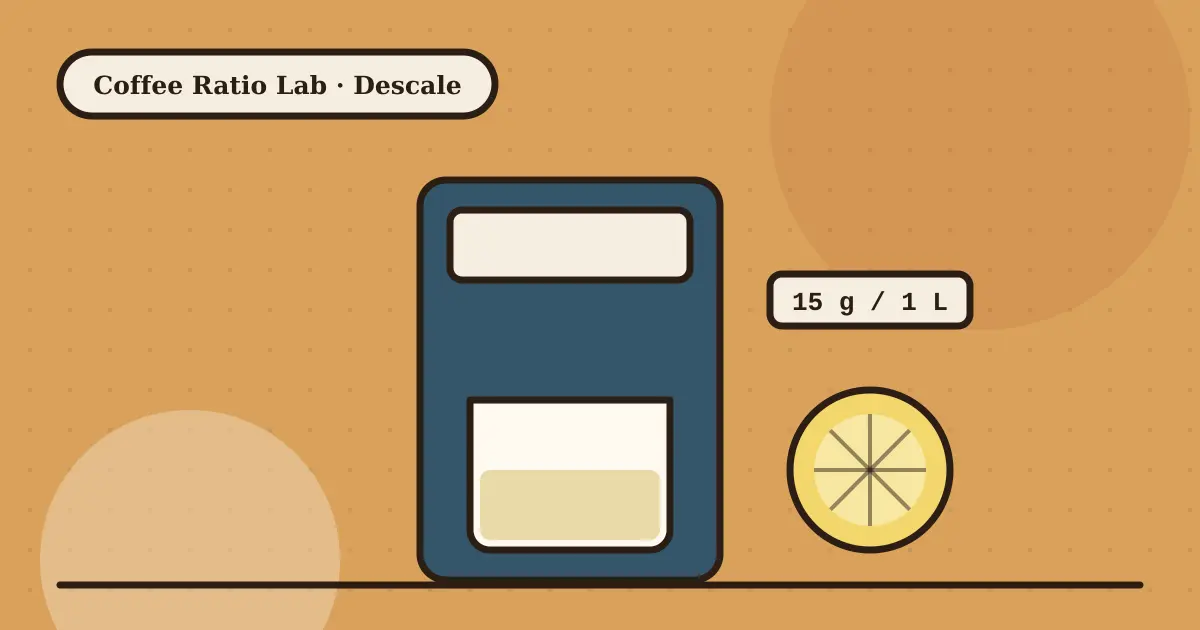
Dissolve about 1 tablespoon (≈15 g) of citric acid per liter of water, run half a brew cycle, let it soak 20–30 minutes, finish the cycle, then run at least two cycles of clean water. Always check your machine's manual first.
If your drip coffee maker has become slower, louder or the coffee tastes flat, limescale is a likely culprit. Minerals in tap water build up inside the heating element and tubes. That reduces the water temperature, slows brewing and can eventually damage the machine. Citric acid is an inexpensive, low-odor way to remove it.
Important: always check your machine's manual first. Some manufacturers specify their own descaler or a particular process, and following their instructions protects your warranty.
Why citric acid?
Citric acid is a mild food-grade acid sold as a powder for baking, preserving and cleaning. It dissolves calcium carbonate (limescale) effectively and, unlike vinegar, it doesn't leave a strong smell or taste that takes several rinses to clear.
| Citric acid | White vinegar | |
|---|---|---|
| Smell | Almost none | Strong |
| Rinse cycles needed | 2 | 3 or more |
| Cost | Low | Low |
| Ease of measuring | Weigh or spoon | Pour |
The ratio
A commonly used strength is about 1 tablespoon (roughly 15 g) of citric acid powder per 1 liter of water. Dissolve it fully in warm water before adding it to the machine. Stronger is not better — overly concentrated solutions don't work faster in a meaningful way and may be harsher on seals.
Step-by-step descaling
1. Empty and prepare
Remove any old coffee and the paper filter. Empty the carafe and the water tank.
2. Mix the solution
In a jug, dissolve the citric acid in warm water until no crystals remain. Make enough to fill the tank to its normal full line.
3. Run half a cycle
Pour the solution into the tank, put the empty carafe in place and start a brew cycle with no coffee. When about half the solution has passed through, switch the machine off.
4. Let it soak
Wait 20–30 minutes. This gives the acid time to work on scale inside the heating element.
5. Finish the cycle
Switch back on and let the rest of the solution run through. Pour it away — don't drink it.
6. Rinse thoroughly
Fill the tank with clean, fresh water and run a full cycle. Discard the water and repeat at least once more. If you can still taste or smell anything, run a third rinse.
7. Clean the removable parts
Wash the carafe, filter basket and lid in warm, soapy water. A little citric acid solution on a soft cloth removes stubborn stains in a glass carafe.
How often to descale
It depends on how hard your water is and how much you brew.
| Water | Daily use | Occasional use |
|---|---|---|
| Soft | Every 3–6 months | Every 6 months |
| Medium | Every 2–3 months | Every 4 months |
| Hard | Every month | Every 2 months |
Many machines have a descale indicator light — when it comes on, follow the steps above (and the manual's reset procedure, if any).
Signs it's time to descale
- Brewing takes noticeably longer
- The machine gurgles or steams more than usual
- Coffee is not as hot as it used to be
- White, chalky deposits appear in the tank or on the hot plate
Reduce scale in the first place
Using filtered water slows limescale buildup and often improves flavor too — see the best water for coffee. Avoid fully distilled water unless the manufacturer recommends it: coffee needs some minerals to taste balanced, and some machines rely on minerals for their water-level sensors.
Frequently asked questions
How much citric acid do I need to descale a coffee maker?
About 1 tablespoon (around 15 g) per liter of water is a common starting point. Follow your machine's manual if it gives a different amount.
Is citric acid better than vinegar for descaling?
It works well and leaves far less smell and taste, so you need fewer rinse cycles. Both are effective on limescale.
Can I descale an espresso machine the same way?
Not necessarily. Espresso machines, especially those with boilers or aluminum parts, often require specific descalers and procedures. Always follow the manufacturer's instructions.
Can I use lemon juice instead?
Lemon juice contains citric acid but in a weaker, inconsistent concentration with pulp and sugars. Pure citric acid powder is more reliable.
Liked this guide? Get the next one free
Subscribe and get our free printable Brew Cheat Sheet — every ratio, grind and temperature on one page. Then one practical brewing tip a week. No spam, unsubscribe anytime.

We write step-by-step guides for everyday home brewers: moka pots, French presses, AeroPress, pour over and cold brew. Every guide is checked against manufacturer instructions and widely accepted brewing guidance, and updated when we learn something better. How we write our guides.