Coffee Bloom Explained: Why Fresh Coffee Bubbles (and How Long to Bloom)
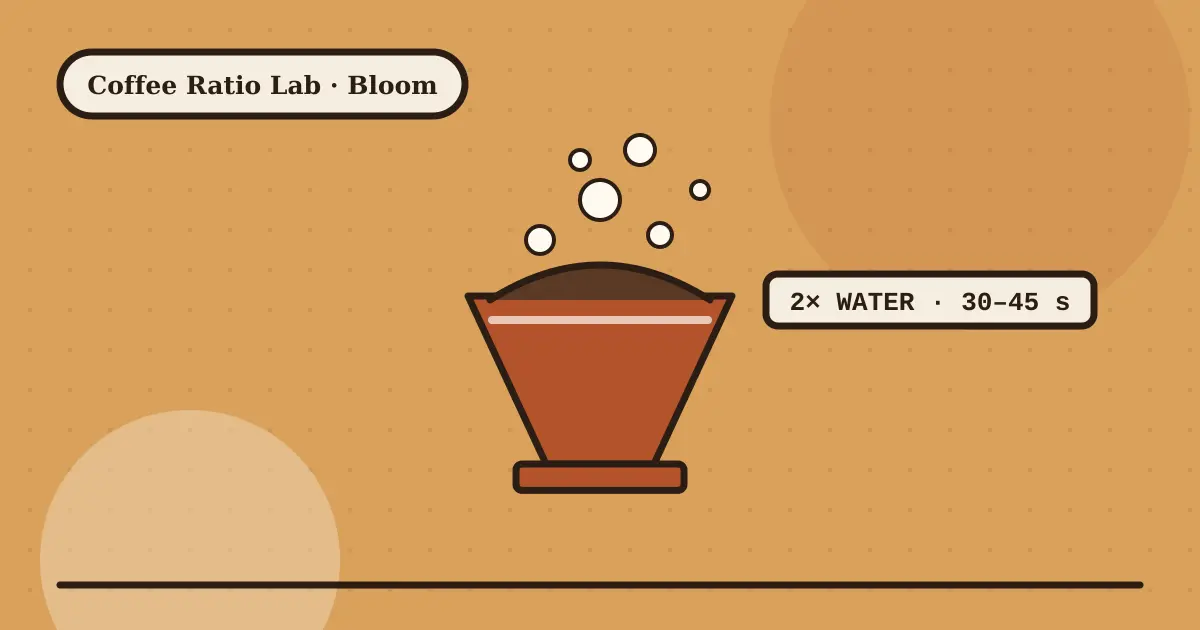
The bloom is the bubbling and rising of coffee grounds when hot water first hits them. It's carbon dioxide escaping from freshly roasted coffee. To bloom, pour about twice the coffee's weight in water (e.g. 30 g water for 15 g coffee), make sure all grounds are wet, and wait 30–45 seconds before continuing. A weak or no bloom usually means the coffee is stale.
Pour a little hot water onto freshly ground coffee and something satisfying happens: the grounds puff up, bubble and smell amazing. That's the bloom. It's not just a nice moment — it affects how evenly your coffee extracts, and it's a free freshness test.
What causes the bloom?
Roasting creates carbon dioxide (CO2) inside coffee beans. Over the days and weeks after roasting, beans slowly release this gas — that's why coffee bags have one-way valves. Grinding opens the beans and releases gas much faster. When hot water hits fresh grounds, the remaining CO2 rushes out, making the coffee bed rise and bubble.
Why blooming improves your coffee
Escaping gas pushes water away from the grounds. If you pour all the water at once onto very fresh coffee, the bubbling CO2 can stop water reaching some particles evenly. Giving the gas time to escape first lets the rest of the water extract more evenly — resulting in a sweeter, more balanced cup with less sourness.
How to bloom: the numbers
| Setting | Recommendation |
|---|---|
| Bloom water | ~2× the coffee weight (some brewers use up to 3×) |
| Time | 30–45 seconds |
| Temperature | Same as your brew water (about 92–96°C / 198–205°F) |
| Technique | Make sure every ground is wet — stir or swirl gently if needed |
Example: 15 g coffee → pour 30–45 g of water → wait 30–45 seconds → continue brewing.
Bloom by brew method
| Method | Bloom? | How |
|---|---|---|
| Pour over | Yes, essential | 2× water, swirl, 30–45 s — see pour over without a gooseneck |
| AeroPress | Helpful | 50 ml water, stir, 20–30 s — see the inverted method |
| French press | Optional | Pour ~1/3 of the water, stir, 30 s, then the rest |
| Drip machine | Some have a "bloom" or "pre-infusion" setting | Use it if available |
| Espresso | Called "pre-infusion" on many machines | Built into the machine |
| Moka pot | No | Not practical |
| Cold brew | No | No heat, so little visible bloom |
What your bloom tells you
The bloom is a quick freshness check:
| What you see | What it means |
|---|---|
| Big dome, lots of bubbles, strong aroma | Very fresh (often within ~1–2 weeks of roasting) |
| Moderate rise and bubbling | Fresh to fairly fresh |
| Little rise, few bubbles | Several weeks old, or ground some time ago |
| No bloom at all | Stale, or pre-ground long ago |
| Violent, foamy bloom that overflows | Extremely fresh — may benefit from resting a few more days |
Decaf, very dark roasts and pre-ground coffee often bloom less, even when reasonably fresh.
Use our coffee freshness calculator to see where your bag is in its freshness window, and store beans properly to keep the bloom alive — see how to store coffee beans.
Common bloom mistakes
- Using too little water, leaving dry clumps that never bloom. Make sure everything is wet.
- Waiting too long (over a minute) — the bed cools and you gain nothing.
- Pouring onto the paper filter instead of the coffee — water runs down the side without wetting the grounds.
- Expecting a bloom from stale coffee — no technique can bring back lost gas.
Frequently asked questions
How long should coffee bloom?
About 30–45 seconds is enough for most coffee.
How much water for the bloom?
Around twice the weight of the coffee — 30 g of water for 15 g of coffee.
Why doesn't my coffee bloom?
It's probably stale, pre-ground some time ago, decaf or a very dark roast. Check the roast date.
Is blooming necessary?
For pour over, yes — it noticeably improves evenness. For French press or a drip machine, it's a small bonus.
Liked this guide? Get the next one free
Subscribe and get our free printable Brew Cheat Sheet — every ratio, grind and temperature on one page. Then one practical brewing tip a week. No spam, unsubscribe anytime.

We write step-by-step guides for everyday home brewers: moka pots, French presses, AeroPress, pour over and cold brew. Every guide is checked against manufacturer instructions and widely accepted brewing guidance, and updated when we learn something better. How we write our guides.