How Is Coffee Decaffeinated? The 4 Main Methods Explained Simply
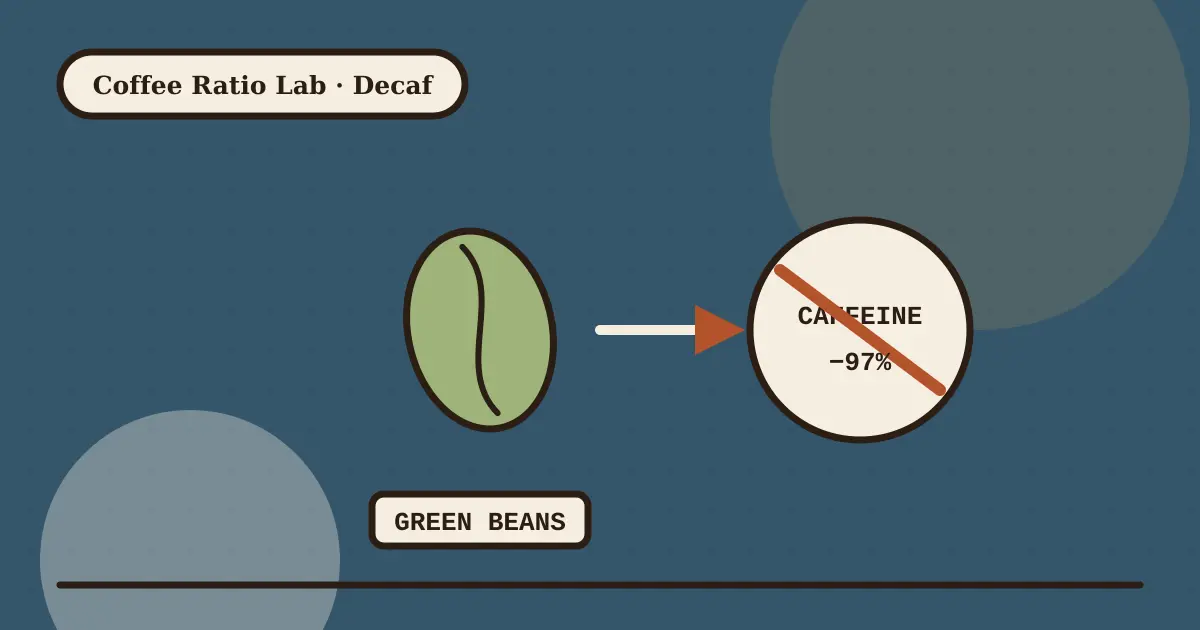
Coffee is decaffeinated before roasting, while the beans are still green. The beans are soaked or steamed so caffeine can move out, then caffeine is removed using water and carbon filters (Swiss Water), pressurised CO2, or a solvent such as ethyl acetate or methylene chloride. Decaf still contains a small amount of caffeine — typically a few milligrams per cup.
Decaf has a reputation for tasting flat, but modern decaf can be excellent. Understanding how it's made helps you choose a good one — and answers the question many people ask: is there anything left in it that I should worry about?
The basic idea
Every method follows the same pattern:
- Green (unroasted) beans are moistened with water or steam, which opens them up and lets caffeine move.
- Caffeine is drawn out using water, CO2 or a solvent.
- Beans are dried back to their original moisture.
- They're roasted like any other coffee — and roasting at high temperatures drives off volatile substances.
Caffeine is removed before roasting because green beans are dense and stable enough to survive soaking and drying.
The four main methods
| Method | What removes the caffeine | Common label wording | Notes |
|---|---|---|---|
| Swiss Water Process | Water + activated carbon filters | "Swiss Water", "chemical-free" | No added solvents; popular with organic coffees |
| CO2 method | Supercritical carbon dioxide | "CO2 decaf" | Selective for caffeine; often used for large batches |
| Ethyl acetate ("sugarcane") | Ethyl acetate solvent | "Sugarcane process", "naturally decaffeinated" | Ethyl acetate occurs naturally in fruit; often made from sugarcane |
| Methylene chloride | Methylene chloride solvent | Often not stated on the bag | Long used industrially; residues are limited by food regulations |
Swiss Water Process
Green beans are soaked in water that is already saturated with all the soluble coffee compounds except caffeine (called "green coffee extract"). Because the water is full of flavor compounds, mainly caffeine moves out of the beans. The water is then passed through carbon filters that trap caffeine, and reused.
CO2 method
Moistened beans are placed in a pressure vessel with carbon dioxide at high pressure, where it behaves partly like a liquid. It dissolves caffeine selectively; the caffeine is then separated out and the CO2 is recycled.
Ethyl acetate ("sugarcane" process)
Beans are steamed and rinsed with ethyl acetate, a compound found naturally in many fruits. In "sugarcane decaf", the ethyl acetate is produced by fermenting sugarcane. This method is common for Colombian decafs and often leaves a mild, sweet note.
Methylene chloride
The traditional industrial solvent method. It's very effective at removing caffeine. Because the solvent is volatile and is driven off during drying and roasting, regulators set strict limits on any residue left in the coffee. If you prefer to avoid solvents altogether, look for Swiss Water or CO2 decaf.
How much caffeine is left?
Decaf isn't 100% caffeine-free. Industry practice and regulations typically require most of the caffeine to be removed — commonly cited as at least 97%. A cup of brewed decaf usually contains only a few milligrams, compared with roughly 80–100 mg in regular brewed coffee. Track it with the caffeine calculator.
Why decaf can taste different
Removing caffeine also removes or changes some flavor compounds, and decaf beans can roast differently (they often look darker and brown faster). Modern specialty decafs taste much better than older grocery store versions. Tips:
- Buy fresh decaf from a roaster that lists the method and roast date.
- Brew slightly cooler — decaf beans are more porous and extract quickly (see the water temperature chart).
- Grind a touch coarser if it tastes bitter.
How to choose a decaf
| You want… | Look for |
|---|---|
| No added chemical solvents | Swiss Water or CO2 |
| Sweet, fruity flavor | Sugarcane (ethyl acetate) |
| Lowest price | Supermarket decaf (method often unstated) |
| Best taste overall | Fresh specialty decaf with the method listed |
Frequently asked questions
Is decaf coffee completely caffeine-free?
No. It usually contains a few milligrams per cup — much less than regular coffee, but not zero.
Is Swiss Water decaf chemical-free?
It uses only water and carbon filtration, with no added solvents.
Is decaf bad for you?
Decaf is widely consumed and regulated as a food. If you're concerned about solvents, choose Swiss Water or CO2 decaf.
Why does decaf taste different?
The process removes some flavor compounds along with caffeine, and the beans roast differently. Fresh, well-roasted decaf can taste very close to regular coffee.
- Irish coffee — Foynes, Ireland
- Kaffeost — Northern Finland & Sweden
- Red eye coffee — United States
- Vietnamese egg coffee — Hanoi, Vietnam
Liked this guide? Get the next one free
Subscribe and get our free printable Brew Cheat Sheet — every ratio, grind and temperature on one page. Then one practical brewing tip a week. No spam, unsubscribe anytime.

We write step-by-step guides for everyday home brewers: moka pots, French presses, AeroPress, pour over and cold brew. Every guide is checked against manufacturer instructions and widely accepted brewing guidance, and updated when we learn something better. How we write our guides.