What Water Temperature for Coffee? A Chart by Brew Method and Roast
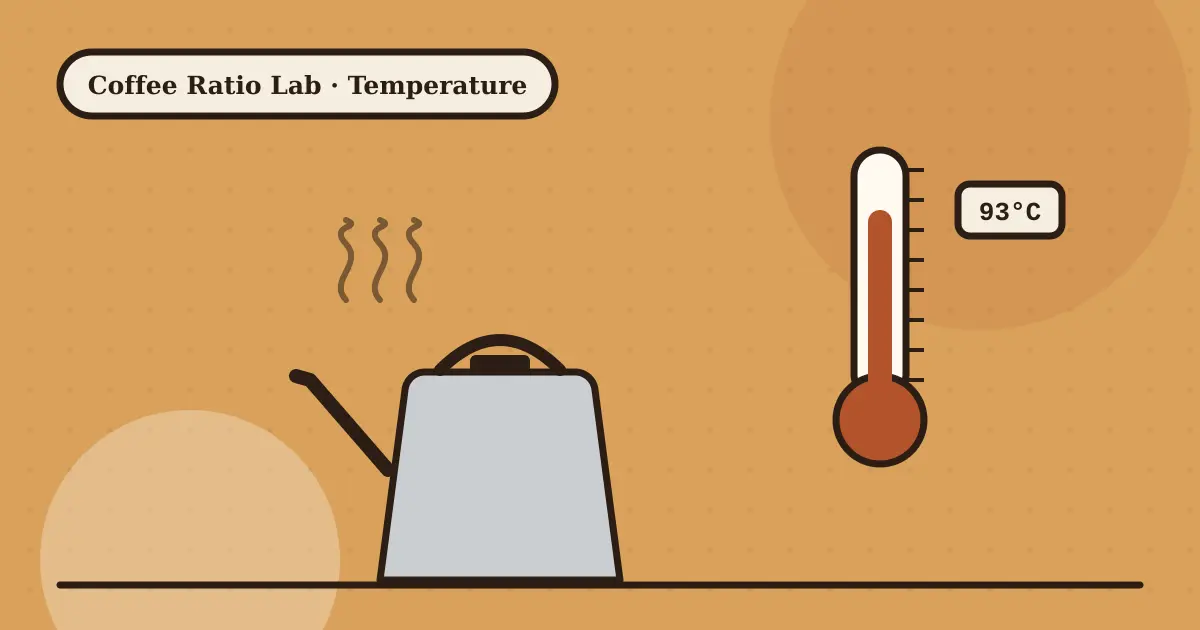
For most hot brewing, use water between about 90°C and 96°C (194–205°F). Use the hotter end for light roasts, pour over and AeroPress, and slightly cooler water (88–92°C / 190–198°F) for dark roasts. Without a thermometer, let a boiled kettle rest for about 30–45 seconds. Cold brew uses cold or room-temperature water.
Water temperature controls how quickly flavors dissolve out of coffee. Too cool, and the cup tastes flat and sour. Too hot, and harsh, bitter compounds come through faster — especially with dark roasts. Getting it roughly right is easy once you know the target for your method.
The general rule
The range most coffee professionals use for hot brewing is about 90–96°C (195–205°F). The Specialty Coffee Association's brewing guidance sits in a similar range. Water straight off a rolling boil is about 100°C (212°F) at sea level — a little too hot for many coffees.
Temperature chart by brew method
| Method | Recommended | °F | Notes |
|---|---|---|---|
| Pour over | 92–96°C | 198–205°F | Hotter helps extraction with light roasts |
| Drip machine | 92–96°C | 198–205°F | Set by the machine; descale to keep it there |
| French press | 92–95°C | 198–203°F | Long steep — no need for maximum heat |
| AeroPress | 85–95°C | 185–203°F | Very flexible; cooler for dark roasts |
| Moka pot (water in boiler) | Start with hot, just-boiled water | — | Reduces time on the heat — see moka pot amounts |
| Espresso | 90–96°C | 194–205°F | Set on the machine |
| Turkish coffee | Heat slowly, never boil hard | — | Remove as foam rises |
| Cold brew | 4–22°C | 39–72°F | Fridge or room temp — see cold brew ratio guide |
Adjust for roast level
Roast changes how easily coffee gives up its flavor:
| Roast | Suggested water | Why |
|---|---|---|
| Light | 94–96°C (201–205°F) | Denser beans extract more slowly; hotter water brings out sweetness |
| Medium | 92–94°C (198–201°F) | Balanced middle |
| Dark | 88–92°C (190–198°F) | Porous beans extract fast; cooler water avoids ashy bitterness |
If you only change one thing when switching between light and dark roasts, change the water temperature by 3–5°C (37–41°F).
No thermometer? Use the kettle-rest method
After the kettle switches off (or the water stops boiling), the temperature drops quickly at first. Approximate times for a typical half-full electric kettle with the lid closed:
| Wait after boiling | Approximate temperature |
|---|---|
| 0 seconds | ~98–100°C (208–212°F) |
| 30 seconds | ~95–96°C (203–205°F) |
| 1 minute | ~93–94°C (199–201°F) |
| 2 minutes | ~90°C (194°F) |
| 4 minutes | ~85–87°C (185–189°F) |
Kettles cool at different rates depending on size, material and how full they are, so treat this as a guide. If you want precision, test your kettle once with a cooking thermometer and write down your times.
Another quick trick: pour boiling water into a cool, empty jug or pouring kettle — the transfer usually drops it by a few degrees.
Altitude changes boiling point
Water boils at a lower temperature at altitude — roughly 1°C (34°F) lower for every 300 m above sea level.
| Altitude | Approx. boiling point |
|---|---|
| Sea level | 100°C (212°F) |
| 1,000 m | ~97°C (207°F) |
| 1,500 m | ~95°C (203°F) |
| 2,000 m | ~93°C (199°F) |
At high altitude, use water straight off the boil, grind slightly finer, or brew a little longer to compensate for the cooler maximum temperature.
Signs your water is the wrong temperature
| Taste | Possible temperature issue | Try |
|---|---|---|
| Flat, sour, thin | Too cool | Hotter water or shorter wait after boiling |
| Harsh, bitter, ashy (dark roast) | Too hot | Wait 1–2 minutes after boiling |
| Fine with one coffee, bad with another | Roast mismatch | Adjust per roast level (table above) |
Temperature is only one variable — grind, ratio and water quality matter too. If temperature changes don't fix it, check our bitter coffee chart.
Frequently asked questions
Can I use boiling water for coffee?
You can, and many people do with French press or instant coffee. For better flavor, let it rest 30–45 seconds, especially with dark roasts.
What temperature is too hot for coffee?
Above about 96–97°C (205–207°F), bitter compounds extract faster. Brewing is rarely improved by water at a rolling boil.
What is 200°F in Celsius?
200°F is about 93°C (199°F) — right in the ideal brewing range.
Does water temperature matter for French press?
Yes, but it's forgiving because of the long steep. 92–95°C (198–203°F) works well.
Liked this guide? Get the next one free
Subscribe and get our free printable Brew Cheat Sheet — every ratio, grind and temperature on one page. Then one practical brewing tip a week. No spam, unsubscribe anytime.

We write step-by-step guides for everyday home brewers: moka pots, French presses, AeroPress, pour over and cold brew. Every guide is checked against manufacturer instructions and widely accepted brewing guidance, and updated when we learn something better. How we write our guides.