How to Make Iced Coffee That Isn't Watery (The Ice-Math Method)
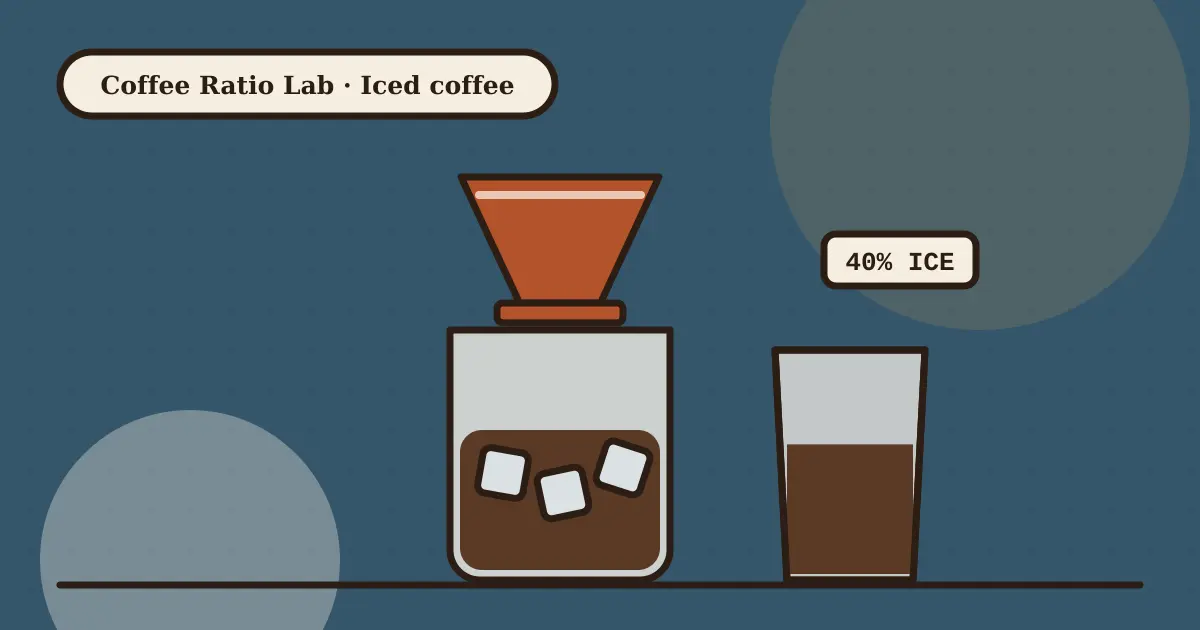
Iced coffee turns watery when ice melts into coffee brewed at normal strength. Fix it by brewing stronger to account for the ice: replace about 40% of the brew water with ice — for example 30 g coffee, 300 g hot water poured directly onto 200 g ice. Or use coffee ice cubes, or dilute cold brew concentrate.
Pouring hot coffee over a glass of ice is the obvious way to make iced coffee — and the fastest way to make it taste thin. The ice melts, the coffee is diluted by a third or more, and you end up with brown water. The fix is simple math: count the ice as part of your water.
Why iced coffee goes watery
A normal hot cup is brewed at about 1:16. When you pour, say, 300 ml (10 oz) of hot coffee over a glass of ice, around 100–150 g of ice melts almost instantly to cool it down. Now your ratio is closer to 1:21 — far weaker than you designed.
There are three ways to solve this:
- Brew stronger, directly onto ice (the ice-math method)
- Use ice that doesn't dilute (coffee ice cubes)
- Start with something cold already (cold brew)
Method 1: The ice-math method (best flavor, 5 minutes)
This is often called the Japanese iced coffee method. You brew hot coffee straight onto ice so it chills immediately, locking in aroma — and you count the ice as brew water.
The rule
Keep your usual total ratio (around 1:16 to 1:17), but split the water: about 60% hot water for brewing, about 40% ice in the jug.
Recipe for one large glass
| Amount | |
|---|---|
| Coffee | 30 g, ground slightly finer than usual |
| Hot water (brewing) | 300 g at 93–96°C (199–205°F) |
| Ice in the jug/carafe | 200 g |
| Total ratio | 30 : 500 ≈ 1:16.7 |
| Result | ~440 ml strong, cold coffee |
Steps (pour over or drip)
- Put 200 g of ice in the carafe or jug under your brewer.
- Grind 30 g of coffee a notch finer than usual — you're using less hot water, so finer grind helps extract enough flavor.
- Brew with 300 g of hot water as you normally would (bloom, then pour in stages). See our pour over without gooseneck guide.
- Swirl the jug until most of the ice has melted.
- Pour into a glass with fresh ice.
Scaling table
| Servings | Coffee | Hot water | Ice in jug |
|---|---|---|---|
| 1 small | 18 g | 180 g | 120 g |
| 1 large | 30 g | 300 g | 200 g |
| 2 large | 60 g | 600 g | 400 g |
| 4 | 100 g | 1,000 g | 650 g |
Drip machine version: put the ice in the carafe, use the same coffee you'd use for the full volume (hot water + ice), but only fill the tank with the hot-water portion.
French press version: brew 30 g coffee with 300 g water for 4 minutes, press, and pour straight onto 200 g ice. Slightly less aromatic than pour over, but very good.
Method 2: Coffee ice cubes (zero dilution)
Freeze leftover coffee (or freshly brewed coffee at normal strength) in an ice cube tray. Use these instead of regular ice — as they melt, they add coffee, not water.
Tips:
- Use a silicone tray with a lid to keep fridge smells out.
- Use within 2 weeks for best flavor.
- Make milk ice cubes too for iced lattes that never go watery.
Method 3: Cold brew (smoothest, plan ahead)
Cold brew is made without heat, so there's nothing to melt the ice quickly. Make a concentrate at 1:5, then dilute it — see our cold brew ratio guide and use the cold brew dilution calculator for exact amounts.
| Iced coffee (ice-math) | Cold brew | |
|---|---|---|
| Time | 5 minutes | 12–24 hours |
| Taste | Bright, aromatic, more acidity | Smooth, chocolatey, low acidity |
| Best for | Light and medium roasts | Medium and dark roasts |
| Keeps | Drink fresh | Up to about a week in the fridge |
Method 4: Quick iced instant coffee
Dissolve 2 teaspoons of instant coffee in 30 ml (1 oz) of hot water, stir until fully dissolved, then add 150 ml (5.1 oz) cold milk or water and ice. Dissolving in a little hot water first avoids gritty, undissolved granules.
Sweetening iced coffee
Sugar doesn't dissolve well in cold liquid. Make a simple syrup: equal weights of sugar and hot water, stirred until clear, cooled and kept in the fridge. Add 10–20 ml per glass.
Iced latte without a machine
- Make 80–100 ml of strong coffee — moka pot, concentrated AeroPress, or the ice-math method with half the water.
- Fill a glass with ice (or coffee/milk ice cubes).
- Add 150–200 ml cold milk, then pour the coffee on top.
- For cold foam, froth cold skim or barista oat milk with a handheld frother — see how to froth milk.
Frequently asked questions
How do I make iced coffee not watery?
Brew it stronger by counting the ice as part of the water, use coffee ice cubes, or use cold brew concentrate.
Can I put hot coffee in the fridge to make iced coffee?
You can, but slow cooling dulls aroma and can taste stale. Brewing directly onto ice keeps it fresher-tasting.
What is the best ratio for iced coffee?
Keep around 1:16–1:17 overall, with about 40% of the water as ice in the jug.
Is iced coffee the same as cold brew?
No. Iced coffee is brewed hot and chilled; cold brew is steeped cold for many hours. They taste quite different.
Liked this guide? Get the next one free
Subscribe and get our free printable Brew Cheat Sheet — every ratio, grind and temperature on one page. Then one practical brewing tip a week. No spam, unsubscribe anytime.

We write step-by-step guides for everyday home brewers: moka pots, French presses, AeroPress, pour over and cold brew. Every guide is checked against manufacturer instructions and widely accepted brewing guidance, and updated when we learn something better. How we write our guides.