How to Make Turkish-Style Coffee Without a Cezve (Small Saucepan Method)
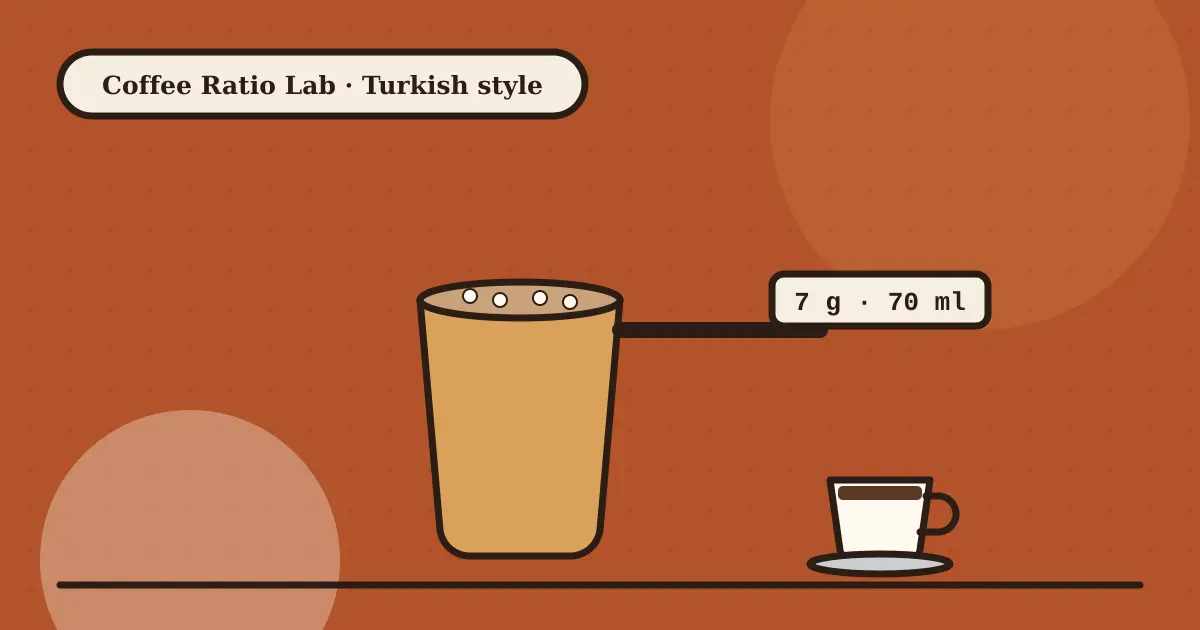
Use 1 heaped teaspoon (about 7 g) of powder-fine coffee per 70 ml (2.4 oz) of cold water. Add sugar now if you want it. Stir in a small saucepan, then heat very slowly on low until a thick foam rises to the rim — about 3–4 minutes. Take it off before it boils, spoon foam into the cup, then pour the coffee gently. Let the grounds settle for a minute before sipping.
Turkish coffee is one of the oldest ways of brewing coffee: extra-fine coffee, water and optional sugar heated slowly in a small pot called a cezve (or ibrik). The grounds are not filtered — they settle in the cup. You don't need a cezve to make a good version at home; the smallest saucepan you own will do.
What makes it different
| Turkish-style coffee | Other methods | |
|---|---|---|
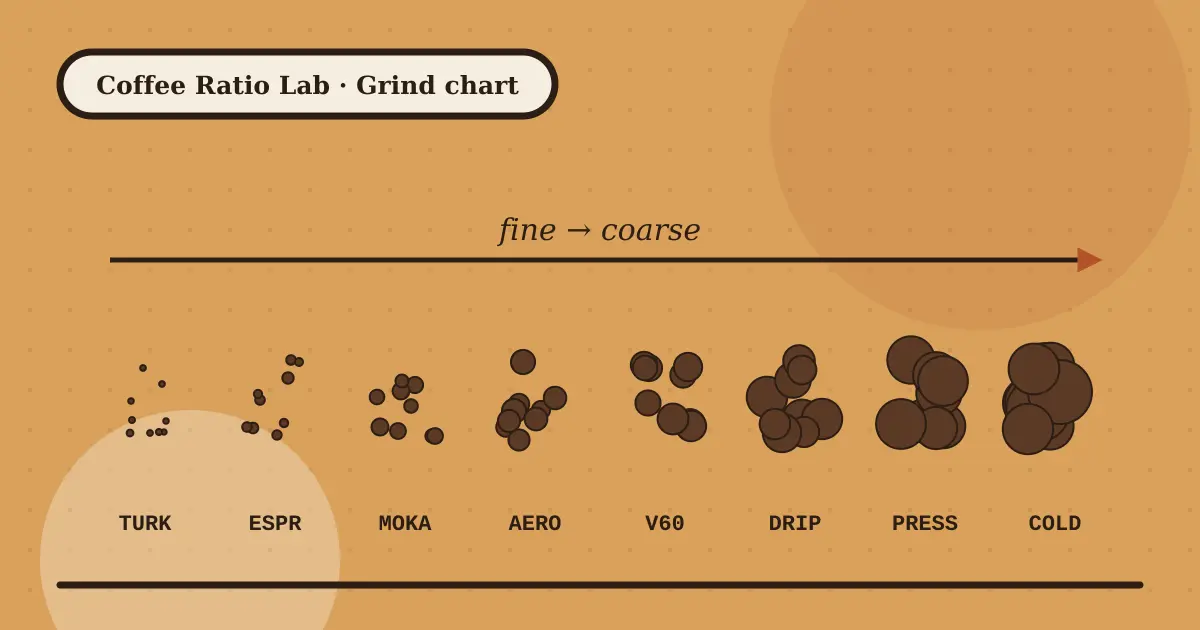
| Grind | Powder, finer than espresso | Fine to coarse |
| Filter | None — grounds settle in the cup | Paper, mesh or basket |
| Sugar | Added before brewing | Added after, if at all |
| Heat | Slow, gentle, never boiling | Varies |
| Serving | Small cups (about 60–90 ml) | Mugs |
| Hallmark | Thick foam on top | Varies |
What you need
- The smallest saucepan or milk pan you have (a narrow pan helps foam form)
- Powder-fine ground coffee — sold as "Turkish grind". Most home burr grinders can't go this fine; pre-ground Turkish coffee is easiest.
- Cold water and small cups
- Sugar (optional)
Amounts per cup
| Cups | Cold water | Coffee | Sugar (optional) |
|---|---|---|---|
| 1 | 70 ml | 7 g (1 heaped tsp) | 0–2 tsp |
| 2 | 140 ml | 14 g | 0–4 tsp |
| 3 | 210 ml | 21 g | 0–6 tsp |
Traditional sweetness levels are often described as plain (no sugar), medium and sweet. Decide before brewing — you can't stir sugar in afterward without disturbing the grounds.
Step by step
- Measure cold water using the cup you'll serve in, and pour it into the pan.
- Add coffee and sugar on top. Stir gently until the coffee is mixed in and no dry clumps remain. Don't stir again after this.
- Heat on the lowest setting. Slow heating builds a better foam and avoids bitterness. It should take about 3–4 minutes.
- Watch for the foam. A dark ring of foam forms at the edges, then rises across the surface.
- Remove before it boils. When the foam rises toward the rim, take the pan off the heat immediately.
- Share the foam: spoon a little foam into each cup first.
- Pour slowly down the side of the cup to keep the foam intact.
- Wait about a minute for the grounds to settle. Sip gently and stop before the sludge at the bottom.
Some people return the pan to the heat briefly for a second rise of foam — optional, but stop before it boils.
Common mistakes
| Mistake | Result | Fix |
|---|---|---|
| Letting it boil | Foam collapses, bitter taste | Remove as soon as foam rises |
| Heat too high | Little foam, scorched taste | Lowest heat, be patient |
| Grind not fine enough | Gritty, weak, no foam | Use proper Turkish-grind coffee |
| Stirring during heating | Foam doesn't form | Stir only once at the start |
| Hot water at the start | Weak foam | Always start with cold water |
| Big wide pan for one cup | Water spreads too thin | Use the smallest pan you have |
Flavor variations
- Cardamom: add a pinch of ground cardamom with the coffee — common in many regional styles.
- Mastic or cinnamon: a tiny pinch at the start.
- Milk version: some people brew with part milk, but it can boil over quickly — keep heat very low.
Caffeine and strength
Turkish coffee tastes very strong because nothing is filtered out, but a small 70 ml (2.4 oz) cup uses only about 7 g of coffee — similar to a single espresso in caffeine terms. Track your total with the caffeine calculator.
Related guides
- Coffee grind size chart — Turkish is the finest grind of all
- How to make coffee without a coffee maker
- What water temperature for coffee?
Frequently asked questions
Can I make Turkish coffee with regular ground coffee?
You can make a similar drink, but it won't foam well and will taste weaker and grittier. Powder-fine grind is key.
How much coffee per cup for Turkish coffee?
About 7 g — one heaped teaspoon — per 70 ml (2.4 oz) of water.
Should Turkish coffee boil?
No. Boiling destroys the foam and makes it bitter. Remove it just as the foam rises.
Do you drink the grounds?
No. Let them settle and stop sipping before you reach the thick layer at the bottom.
Liked this guide? Get the next one free
Subscribe and get our free printable Brew Cheat Sheet — every ratio, grind and temperature on one page. Then one practical brewing tip a week. No spam, unsubscribe anytime.

We write step-by-step guides for everyday home brewers: moka pots, French presses, AeroPress, pour over and cold brew. Every guide is checked against manufacturer instructions and widely accepted brewing guidance, and updated when we learn something better. How we write our guides.