Why Does My Coffee Taste Bitter? A Fix-It Chart for Every Brew Method
Bitter coffee is most often caused by over-extraction (grind too fine, water too hot or brewing too long), a very dark roast, stale coffee, dirty equipment, or coffee kept on a hot plate. Grind coarser and shorten the brew first.
Some bitterness is natural in coffee — it's part of what makes it taste like coffee. But when bitterness dominates, lingers harshly or tastes burnt, something in your brewing is off. The good news: it's almost always one of a handful of causes, and most are free to fix.
The five most common causes
1. Over-extraction
Water pulls flavor compounds out of coffee in a rough order: acids first, then sugars, then heavier bitter compounds. Brew too long, too hot or too fine and you extract too much of the last group. Over-extracted coffee tastes bitter, dry and hollow.
Fix: grind coarser, shorten brew time, or use slightly cooler water.
2. Very dark roast
Dark roasting creates roasty, smoky, bitter flavors by design. No brewing technique will make a very dark roast taste like a light one.
Fix: try a medium roast, use slightly cooler water (88–92°C / 190–198°F) and a bit less coffee.
3. Stale or poorly stored coffee
Old coffee tastes flat and can become harsh and papery. Pre-ground coffee goes stale much faster than whole beans.
Fix: buy smaller amounts, grind just before brewing, and store beans airtight away from heat and light.
4. Dirty equipment
Coffee oils left in grinders, filter baskets, carafes and machines turn rancid and add bitter, stale notes to every cup.
Fix: clean equipment regularly — see our guides to cleaning a burr grinder and descaling a drip coffee maker.
5. Coffee kept hot for too long
A drip machine's hot plate keeps "cooking" coffee. Within 20–30 minutes, it tastes noticeably more bitter.
Fix: pour into a pre-heated thermos instead of leaving the carafe on the plate.
Fix-it chart by brew method
| Method | Most likely cause | First thing to try |
|---|---|---|
| Drip machine | Hot plate, scale build-up | Use a thermos; descale |
| Pour over | Grind too fine, slow drain | Grind 1–2 steps coarser |
| French press | Steeping too long, coffee left in press | Pour off right after plunging |
| Moka pot | Heat too high, brewing to the end | Medium-low heat; stop at the gurgle |
| AeroPress | Long steep with fine grind, over-pressing | Coarsen grind; stop at the hiss |
| Espresso | Shot running too slowly (over 35 s) | Grind slightly coarser |
| Instant | Water too hot, too much powder | Use water just off the boil, less powder |
Bitter or sour? Tell them apart
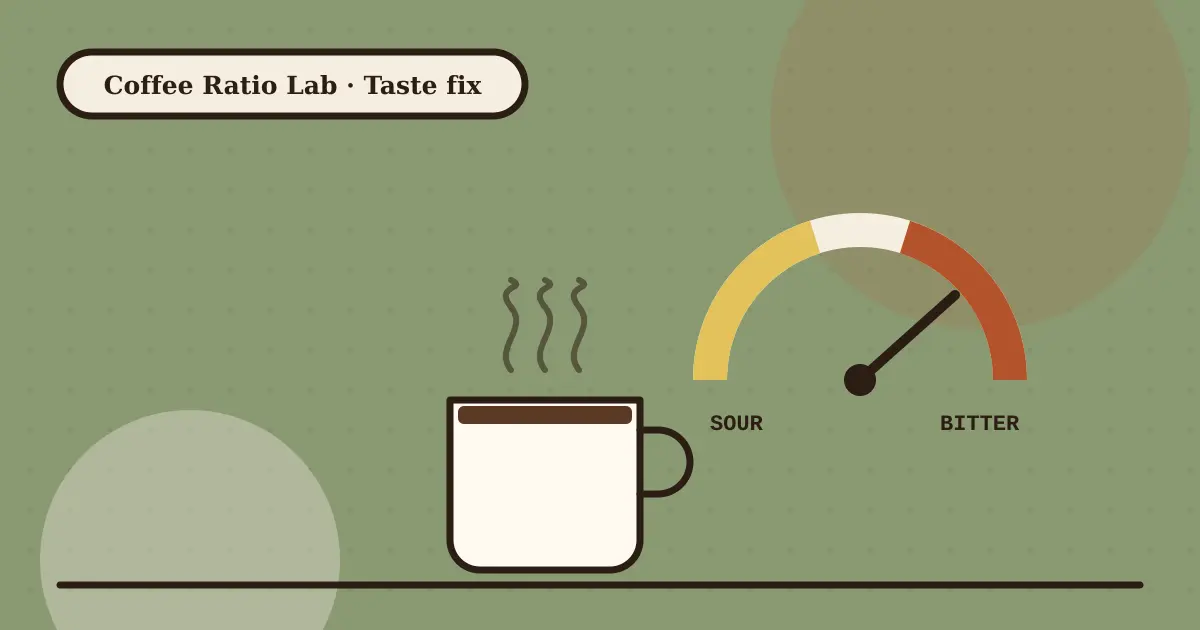
People often confuse the two. A quick guide:
- Bitter is felt at the back of the tongue, lingers, and can make your mouth feel dry. Like dark chocolate or tonic water.
- Sour is sharp, at the sides of the tongue, and fades quickly. Like lemon or unripe fruit.
Sour means under-extracted (grind finer, brew longer). Bitter means over-extracted (grind coarser, brew shorter). Sometimes a cup is both — usually a sign of uneven extraction from an inconsistent grinder or poor pouring.
Quick hacks while you fix the root cause
- A tiny pinch of salt in the grounds or cup reduces perceived bitterness.
- Milk softens bitterness and adds sweetness.
- Better water: very hard or chlorinated tap water can make coffee taste harsh. Filtered water often helps — see the best water for coffee.
Frequently asked questions
Why is my coffee bitter even with good beans?
Usually the grind is too fine, the water too hot, or the brew too long. Start by grinding coarser.
Does adding salt to coffee really reduce bitterness?
Yes. A very small amount of salt suppresses bitterness perception. Too much will make it taste salty.
Is bitter coffee bad for you?
No, it's a taste issue rather than a health issue. Very old coffee or coffee from dirty equipment simply tastes unpleasant.
Why does my coffee get more bitter as it cools?
As coffee cools, some flavors become more noticeable. Coffee that stays on a hot plate also keeps changing chemically and becomes harsher.
Liked this guide? Get the next one free
Subscribe and get our free printable Brew Cheat Sheet — every ratio, grind and temperature on one page. Then one practical brewing tip a week. No spam, unsubscribe anytime.

We write step-by-step guides for everyday home brewers: moka pots, French presses, AeroPress, pour over and cold brew. Every guide is checked against manufacturer instructions and widely accepted brewing guidance, and updated when we learn something better. How we write our guides.