What Is Café de Olla? Mexico's Spiced Clay-Pot Coffee
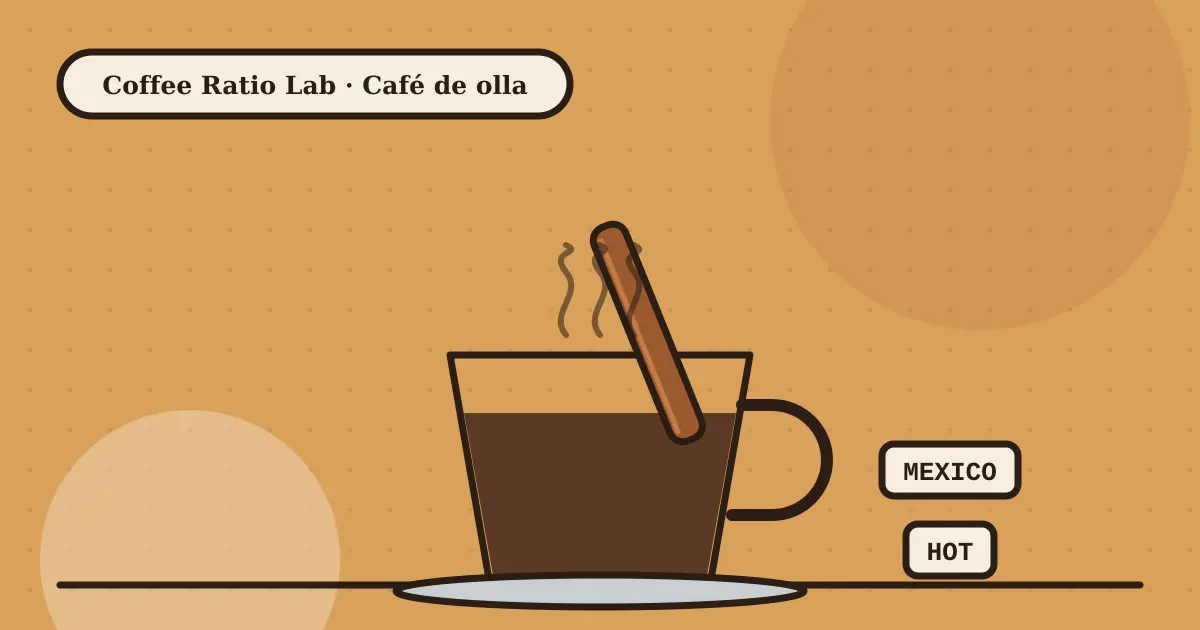
Café de olla ("pot coffee") is a traditional Mexican coffee brewed in an earthenware pot with cinnamon sticks and piloncillo, an unrefined cane sugar. It tastes sweet, warmly spiced and slightly caramel-like, and it's usually served black in small clay mugs. You can make it in any saucepan.
What it is
Café de olla is coffee brewed the way many Mexican families have made it for generations: water, a stick of Mexican cinnamon (canela) and a cone of piloncillo are heated in a clay pot (olla de barro), then coarse ground coffee is steeped in the sweet, spiced water and strained. Some recipes add orange peel, cloves or star anise.
Where it comes from
It's a rural and home tradition in Mexico, especially popular in the colder months and during celebrations like Día de Muertos and Christmas. It's often associated with the era of the Mexican Revolution, when it was said to be made for soldiers in camps — a popular story, though hard to document. What's certain is that the clay pot is part of the identity: many people say it adds an earthy note.
What it tastes like
- Sweet with a deep, molasses-like caramel from piloncillo
- Warm spice from cinnamon — Mexican canela (Ceylon cinnamon) is softer and more floral than cassia
- Smooth and full — medium or dark roast coffee is traditional
How to make café de olla on the stove
| Ingredient | For 4 small cups (~600 ml) |
|---|---|
| Water | 750 ml |
| Piloncillo (or dark brown sugar) | 60–80 g |
| Cinnamon stick (canela) | 1 large stick |
| Orange peel (optional) | 1 strip |
| Coarse ground coffee, medium-dark | 40–45 g |
- Add water, piloncillo, cinnamon and orange peel to a pot (clay if you have one, otherwise any saucepan).
- Heat, stirring until the piloncillo dissolves, then simmer gently for 5 minutes to infuse the spices.
- Turn off the heat. Stir in the coffee.
- Cover and steep for 5 minutes.
- Strain through a fine sieve or cloth into cups. See our coffee without a coffee maker guide for straining tips.
Why off the heat? Boiling coffee grounds makes them bitter. Simmer the spices, then steep the coffee.
Piloncillo substitutes
| Substitute | Result |
|---|---|
| Dark muscovado sugar | Closest — rich molasses flavor |
| Dark brown sugar + 1 tsp molasses | Very close |
| Panela (Latin American cane sugar) | Almost identical |
| White sugar | Works, but loses the caramel depth |
Using a clay pot
New clay pots should be cured before first use (many people soak them in water, then rub the inside with garlic or simmer water in them). Clay heats slowly and holds heat well. If you're unsure your pot is food-safe or lead-free, use a stainless steel pan instead.
Variations
- Café de olla with milk: add warm milk for a spiced latte-style drink.
- Iced café de olla: brew double strength and pour over ice — see the ice-math method.
- With chocolate: a piece of Mexican chocolate melted in for a mocha-like version.
Similar drinks
Other sweet, spiced or traditional coffees: Café cubano, Vietnamese iced coffee and Turkish-style coffee.
Frequently asked questions
What does café de olla mean?
"Pot coffee" — named after the clay pot (olla) it's traditionally brewed in.
Is café de olla sweet?
Yes, it's traditionally sweetened with piloncillo, though you can reduce the amount.
Do I need a clay pot?
No. A clay pot adds tradition and a subtle earthy note, but any saucepan works.
Love coffee drinks? Get one new recipe a week
Subscribe and get our free printable Brew Cheat Sheet — every ratio, grind and temperature on one page. Then one practical brewing tip a week. No spam, unsubscribe anytime.

We write step-by-step guides for everyday home brewers: moka pots, French presses, AeroPress, pour over and cold brew. Every guide is checked against manufacturer instructions and widely accepted brewing guidance, and updated when we learn something better. How we write our guides.